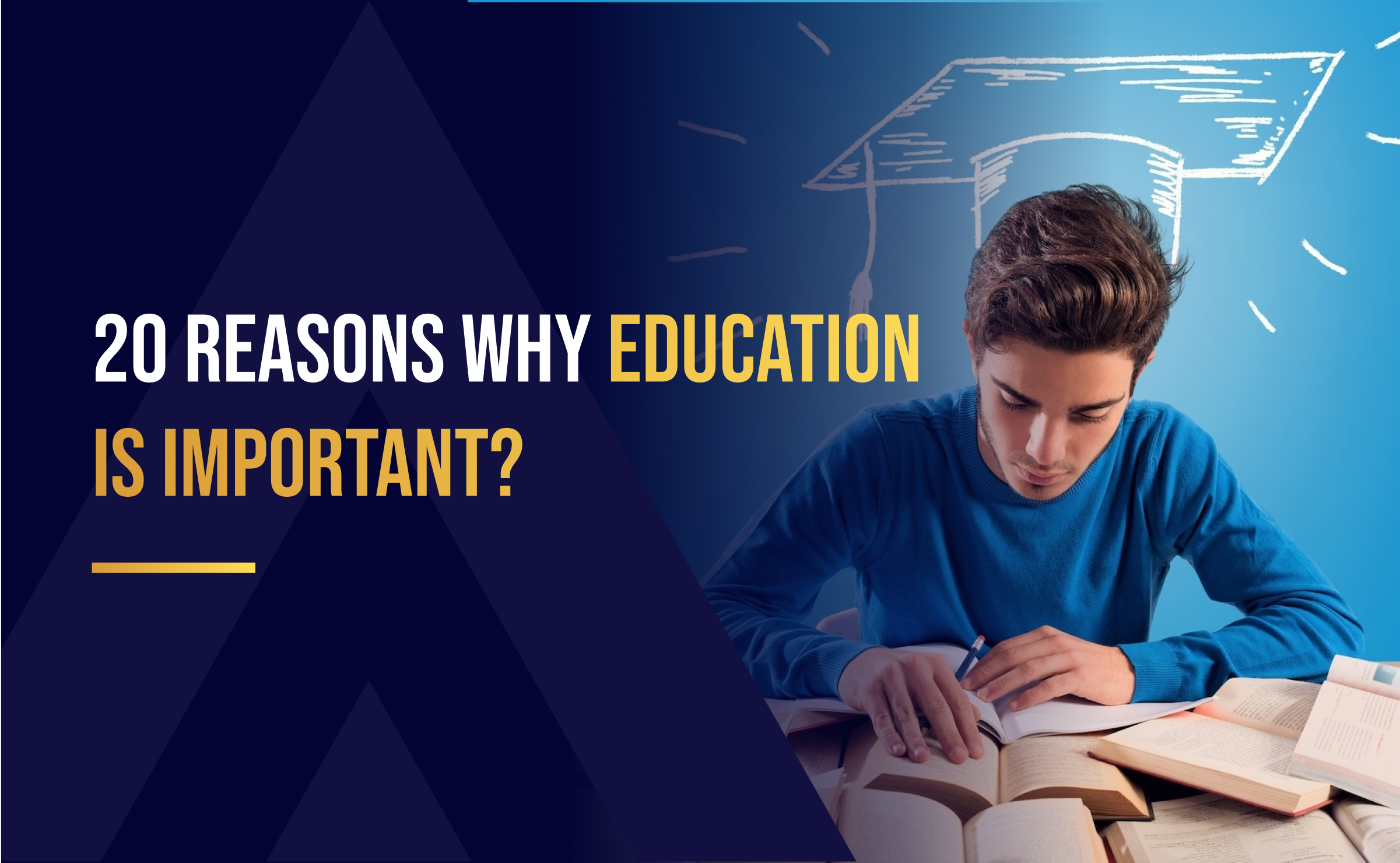
20 Reasons Why Education Is Important: Complete 2026 Guide to Lifelong Success
Education stands as humanity's most powerful tool for transformation, opening doors to opportunities that would otherwise remain closed. Whether you're a student wondering about the value of your studies, a parent encouraging your children, or an adult considering further education, understanding why education matters can provide the motivation needed to pursue knowledge throughout life. This comprehensive guide explores 20 compelling reasons why education is important in 2026 and beyond.
From economic advantages to personal fulfillment, education shapes every aspect of our lives. Research consistently shows that educated individuals enjoy better health outcomes, higher earning potential, greater civic engagement, and enhanced quality of life. Let's dive deep into each reason and discover how education can transform your future.
Understanding Education's Foundational Importance
Before exploring our comprehensive list, it's essential to understand what makes education fundamentally important. For a deeper exploration of education's core significance, our guide on why is education important provides foundational insights that complement these 20 specific reasons.
Education encompasses formal schooling, vocational training, self-directed learning, and lifelong knowledge acquisition. Each form contributes uniquely to human development and societal progress. The following reasons demonstrate education's multifaceted impact across all dimensions of life.
Overview: 20 Reasons Education Matters
| Category | Reasons | Key Impact Areas |
|---|---|---|
| Economic & Career | 1-5 | Income, employment, financial security |
| Personal Development | 6-10 | Confidence, critical thinking, creativity |
| Social & Community | 11-15 | Relationships, citizenship, tolerance |
| Health & Wellbeing | 16-18 | Physical health, mental wellness, longevity |
| Future & Global | 19-20 | Innovation, sustainable development |
Reason 1: Higher Earning Potential
Education directly correlates with increased income throughout one's career. The earnings premium for educated individuals has grown substantially over recent decades, making education one of the most reliable investments for financial advancement.
According to the U.S. Bureau of Labor Statistics 2026 data, median weekly earnings increase significantly with each level of educational attainment. Bachelor's degree holders earn approximately 67% more than those with only high school diplomas, while advanced degree holders see even greater returns.
Earnings by Education Level (2026)
| Education Level | Median Weekly Earnings | Annual Estimate | Lifetime Earnings Premium |
|---|---|---|---|
| Less than High School | $682 | $35,464 | Baseline |
| High School Diploma | $899 | $46,748 | +$450,000 |
| Associate's Degree | $1,005 | $52,260 | +$670,000 |
| Bachelor's Degree | $1,493 | $77,636 | +$1.2 million |
| Master's Degree | $1,737 | $90,324 | +$1.5 million |
| Doctoral Degree | $2,083 | $108,316 | +$2.0 million |
| Professional Degree | $2,180 | $113,360 | +$2.3 million |
For those considering advanced education, understanding how many credits a master's degree requires can help plan this valuable investment in your future earnings potential.
Reason 2: Lower Unemployment Rates
Education provides a powerful buffer against unemployment. During economic downturns, educated workers consistently experience lower unemployment rates and faster re-employment when job losses occur. This protective effect becomes particularly valuable during recessions.
The 2026 unemployment rate for bachelor's degree holders stands at approximately 2.2%, compared to 4.0% for high school graduates—nearly double the rate. This difference translates to greater financial stability and reduced stress during uncertain economic periods.
- Doctoral degree holders: 1.4% unemployment rate
- Professional degree holders: 1.5% unemployment rate
- Master's degree holders: 2.0% unemployment rate
- Bachelor's degree holders: 2.2% unemployment rate
- Associate's degree holders: 2.8% unemployment rate
- Some college, no degree: 3.3% unemployment rate
- High school diploma: 4.0% unemployment rate
- Less than high school: 5.4% unemployment rate
Reason 3: Career Advancement Opportunities
Education opens pathways to promotions, leadership positions, and specialized roles that remain inaccessible without proper credentials. Many organizations require specific educational qualifications for management and executive positions, regardless of experience level.
Understanding the educational requirements for various careers helps individuals plan their advancement strategically. Our comprehensive guides cover pathways for diverse professions:
- Healthcare: Nurse practitioner education requirements
- Medical: Doctor education requirements
- Engineering: Engineer education requirements
- Architecture: Architect education requirements
- Pharmacy: Pharmacist education requirements
Reason 4: Financial Stability and Security
Beyond higher earnings, education contributes to overall financial stability through better financial literacy, access to benefits, and long-term wealth accumulation. Educated individuals typically have better access to retirement plans, health insurance, and other employment benefits.
Studies show that college graduates are more likely to:
- Own homes (65% vs. 40% for non-graduates)
- Have retirement savings (78% vs. 52%)
- Maintain emergency funds (61% vs. 38%)
- Carry health insurance (92% vs. 74%)
- Have life insurance (67% vs. 45%)
Reason 5: Entrepreneurial Success
Education provides the knowledge, skills, and networks necessary for successful entrepreneurship. While formal education isn't required to start a business, studies show that educated entrepreneurs have higher success rates and build larger, more sustainable companies.
Educational benefits for entrepreneurs include:
- Business knowledge: Understanding finance, marketing, operations, and strategy
- Professional networks: Connections with potential partners, investors, and mentors
- Credibility: Educational credentials enhance trust with customers and investors
- Problem-solving skills: Ability to analyze challenges and develop innovative solutions
- Access to resources: University incubators, grants, and support programs
Reason 6: Critical Thinking and Problem-Solving
Education develops critical thinking abilities essential for navigating an increasingly complex world. From evaluating information sources to making sound decisions, educated individuals possess cognitive tools that serve them throughout life.
Critical thinking skills gained through education include:
- Analysis: Breaking down complex problems into manageable components
- Evaluation: Assessing the credibility and relevance of information
- Inference: Drawing logical conclusions from available evidence
- Self-regulation: Monitoring and adjusting one's own thinking processes
- Open-mindedness: Considering alternative perspectives and viewpoints
These skills align closely with educational philosophy principles that emphasize developing the whole person rather than simply transmitting facts.
Reason 7: Enhanced Self-Confidence
Educational achievement builds self-confidence and self-efficacy—the belief in one's ability to succeed. This confidence extends beyond academic settings, influencing career pursuits, personal relationships, and life decisions.
Research demonstrates that educated individuals show:
- Higher self-esteem and positive self-image
- Greater willingness to take calculated risks
- Increased resilience when facing setbacks
- Stronger sense of personal agency and control
- Better ability to advocate for themselves
Reason 8: Creativity and Innovation
Education nurtures creativity and innovative thinking by exposing individuals to diverse ideas, perspectives, and methodologies. This creative capacity proves increasingly valuable in knowledge-based economies that reward novel solutions.
A liberal arts education particularly emphasizes developing creative and analytical abilities through interdisciplinary study. This approach produces graduates who can:
- Connect ideas across different domains
- Approach problems from multiple angles
- Generate original solutions to complex challenges
- Adapt to changing circumstances and requirements
- Communicate ideas effectively across disciplines
Reason 9: Personal Growth and Self-Discovery
Education facilitates personal growth and self-discovery by exposing individuals to new ideas, cultures, and perspectives. This journey of exploration helps people understand themselves better and discover their passions and purpose.
The concept of holistic education emphasizes developing the whole person—intellectually, emotionally, socially, and spiritually. This approach recognizes that education's benefits extend far beyond career preparation.
Personal Development Through Education
| Development Area | Educational Contribution | Life Impact |
|---|---|---|
| Intellectual | Exposure to diverse subjects and ideas | Lifelong curiosity and learning |
| Emotional | Emotional intelligence development | Better relationships and self-regulation |
| Social | Collaboration and communication skills | Stronger community connections |
| Ethical | Moral reasoning and values clarification | Principled decision-making |
| Aesthetic | Arts appreciation and expression | Enhanced quality of life |
Reason 10: Independence and Self-Reliance
Education promotes independence and self-reliance by equipping individuals with knowledge and skills to navigate life's challenges. From managing finances to making informed decisions, educated individuals possess greater autonomy.
Key areas where education supports independence:
- Financial literacy: Managing money, investments, and debt
- Health literacy: Understanding medical information and making health decisions
- Digital literacy: Navigating technology and online information
- Legal literacy: Understanding rights, responsibilities, and contracts
- Civic literacy: Participating effectively in democratic processes
Reason 11: Stronger Relationships and Communication
Education enhances communication skills and relationship-building abilities. Through academic work, group projects, and social interactions, educated individuals develop capacities for expressing ideas clearly and understanding others.
Communication skills developed through education:
- Written communication: Clear, persuasive writing abilities
- Oral communication: Public speaking and presentation skills
- Active listening: Truly understanding others' perspectives
- Non-verbal communication: Body language and emotional cues
- Cross-cultural communication: Interacting effectively across differences
Reason 12: Civic Engagement and Citizenship
Education promotes active citizenship and civic participation. Educated individuals are more likely to vote, volunteer, participate in community organizations, and engage in democratic processes.
Understanding how government institutions work, including what the Department of Education does, enables citizens to participate more effectively in shaping education policy and holding institutions accountable.
Research shows educated citizens are:
- 40% more likely to vote in elections
- Two times more likely to volunteer in communities
- More likely to serve on boards and committees
- Better informed about political issues
- More tolerant of diverse political viewpoints
Reason 13: Tolerance and Understanding
Education fosters tolerance, empathy, and understanding of people from different backgrounds. Exposure to diverse perspectives in educational settings reduces prejudice and promotes social harmony.
Character education programs specifically target the development of values like respect, responsibility, fairness, and compassion. These programs help students:
- Appreciate cultural and individual differences
- Resolve conflicts peacefully
- Stand up against discrimination and bullying
- Build inclusive communities
- Practice ethical decision-making
Reason 14: Social Mobility
Education remains the most powerful engine of social mobility, enabling individuals to improve their socioeconomic status regardless of family background. This transformative power gives hope to millions seeking better lives.
Unfortunately, the relationship between poverty and education creates barriers that must be addressed. Understanding these challenges helps in developing solutions:
| Barrier | Impact on Education | Solutions |
|---|---|---|
| Financial constraints | Limited access to quality schools | Scholarships, financial aid, free community college |
| Food insecurity | Difficulty concentrating, absenteeism | School meal programs, food banks |
| Housing instability | Frequent school changes, stress | McKinney-Vento Act protections, housing assistance |
| Limited resources | No internet, books, quiet study space | Library programs, technology access initiatives |
| Family responsibilities | Working to support family, caregiving | Flexible scheduling, childcare support |
Reason 15: Building Stronger Communities
Education contributes to stronger, more cohesive communities. Schools serve as community hubs, educated citizens contribute to local development, and shared educational experiences build social bonds.
Communities with higher education levels typically show:
- Lower crime rates and safer neighborhoods
- Greater social trust and cooperation
- More robust local economies
- Better public health outcomes
- Stronger civic institutions
Reason 16: Better Physical Health
Education correlates strongly with better physical health outcomes. Educated individuals typically live longer, experience fewer chronic diseases, and practice healthier behaviors.
The importance of physical education specifically demonstrates how education directly promotes health. PE programs teach lifelong fitness habits, sports skills, and health knowledge.
Health Outcomes by Education Level
| Health Indicator | College Graduate | High School Only | Less Than HS |
|---|---|---|---|
| Life expectancy at 25 | 56 more years | 51 more years | 47 more years |
| Obesity rate | 25% | 36% | 38% |
| Smoking rate | 7% | 21% | 23% |
| Regular exercise | 58% | 38% | 31% |
| Diabetes rate | 7% | 12% | 15% |
Reason 17: Improved Mental Health
Education contributes to better mental health outcomes through multiple pathways: economic security, social connections, sense of purpose, and coping skills development. Educated individuals report higher life satisfaction and lower rates of depression.
Mental health benefits of education include:
- Reduced stress: Financial security decreases chronic stress
- Social support: Larger social networks provide emotional resources
- Sense of purpose: Meaningful work and contribution to society
- Cognitive reserve: Mental stimulation protects against cognitive decline
- Coping skills: Better strategies for managing challenges
Reason 18: Longer Life Expectancy
Research consistently shows that education is associated with longer life expectancy. The education-mortality gradient shows that each additional year of education corresponds to reduced mortality risk.
Mechanisms through which education extends life:
- Better health behaviors and lifestyle choices
- Greater access to quality healthcare
- Safer occupational environments
- Reduced stress from financial security
- Stronger social connections and support
Reason 19: Driving Innovation and Progress
Education fuels innovation, scientific advancement, and technological progress. From medical breakthroughs to technological innovations, educated individuals drive the discoveries that improve human life.
Understanding graduate-level education reveals how advanced degrees contribute to research and innovation:
- Research capabilities: Graduate programs develop research skills essential for advancing knowledge
- Specialized expertise: Deep knowledge in specific fields enables breakthroughs
- Collaborative networks: Academic communities facilitate knowledge sharing
- Resource access: Universities provide labs, libraries, and equipment
- Knowledge dissemination: Publications and teaching spread innovations
Reason 20: Contributing to Sustainable Development
Education is fundamental to achieving sustainable development goals and addressing global challenges. From climate change to poverty reduction, educated populations are better equipped to create sustainable solutions.
The United Nations recognizes education as foundational to all 17 Sustainable Development Goals:
- Environmental awareness: Understanding ecological systems and sustainable practices
- Economic development: Building human capital for sustainable growth
- Social equity: Promoting equality and reducing discrimination
- Health improvements: Better health outcomes reduce healthcare burden
- Peace building: Education promotes understanding and reduces conflict
Education Across Different Life Stages
Education's importance varies across life stages, with each period offering unique learning opportunities and challenges. Understanding these stages helps maximize educational benefits throughout life.
Early Childhood Education
The foundations laid during early childhood dramatically influence later success. Understanding the 12 core early childhood education units reveals what early educators must master to support young learners effectively.
Early childhood education provides:
- Cognitive development and school readiness
- Social-emotional skill development
- Language and literacy foundations
- Motor skill development
- Creative expression opportunities
Secondary Education
Understanding what secondary education means helps students and parents navigate this critical transition period between elementary school and higher education or career entry.
Higher Education and Beyond
For those pursuing advanced education, understanding what you can do with a master's in education illustrates the diverse career pathways available through continued study.
Education for Specific Careers
Different careers require varying levels and types of education. Understanding these requirements helps individuals plan their educational journeys strategically.
Teaching and Education Careers
Those interested in education careers should explore:
- What education you need to be a teacher
- How to become a physical education teacher
- What special education teachers do
- How to get special education certification
- Do you need an education degree to teach
Healthcare Careers
Healthcare professionals require extensive education. Explore requirements for:
- Dentist education requirements
- Chiropractor education requirements
- Therapist education requirements
- Athletic trainer education requirements
Creative and Technical Careers
Creative fields also benefit from formal education:
- Screenwriter education requirements
- Video game designer education requirements
- Cosmetologist education requirements
- Chef education requirements
Maximizing Educational Benefits
To fully realize education's benefits, consider these strategies:
1. Choose the Right Educational Path
- Align education with career goals and interests
- Consider return on investment for different programs
- Explore alternative credentials and certifications
- Balance theoretical knowledge with practical skills
2. Engage Actively in Learning
- Participate in class discussions and group projects
- Seek mentorship from professors and professionals
- Pursue internships and practical experiences
- Build relationships with peers for networking
3. Continue Learning Throughout Life
- Stay current with professional development
- Explore online courses and certifications
- Read widely across disciplines
- Attend conferences and workshops
Education's Role in Special Populations
Education plays particularly crucial roles for certain populations with unique needs.
Special Education
For students with disabilities, education must be adapted to meet individual needs. Understanding assistive technology in special education reveals how technology can help all students access learning opportunities.
Early Childhood Intervention
Those interested in supporting young learners can explore careers with an early childhood education degree, which offers diverse pathways for making a difference in children's lives.
Overcoming Barriers to Education
Despite education's importance, many face significant barriers. Addressing these obstacles is essential for ensuring equitable access to education's benefits.
Common Barriers and Solutions
| Barrier | Description | Potential Solutions |
|---|---|---|
| Financial cost | Tuition, books, living expenses | Scholarships, grants, income-share agreements, community college |
| Time constraints | Work, family responsibilities | Online programs, part-time options, employer tuition assistance |
| Geographic access | Distance from educational institutions | Online learning, hybrid programs, satellite campuses |
| Academic preparation | Inadequate prior education | Remedial programs, bridge courses, tutoring |
| Disability | Physical or learning disabilities | Accommodations, assistive technology, specialized programs |
| Language barriers | English language learner status | ESL programs, bilingual education, language support services |
The Future of Education
Education continues evolving to meet changing societal needs. Understanding emerging trends helps individuals prepare for future learning opportunities.
Emerging Trends in Education
- Personalized learning: AI-powered adaptive learning systems
- Micro-credentials: Stackable certificates and badges
- Skills-based education: Focus on competencies over credentials
- Hybrid learning: Combining online and in-person instruction
- Lifelong learning platforms: Continuous skill development throughout careers
Frequently Asked Questions
Is education still important in the digital age?
Absolutely. While information is more accessible than ever, education provides the critical thinking skills needed to evaluate information, the credentials employers value, and the structured learning experiences that develop complex skills. The digital age has actually increased the importance of higher education for career success.
Can self-education replace formal education?
Self-education is valuable for continuous learning and skill development, but formal education offers structured curricula, credentials recognized by employers, networking opportunities, mentorship, and accountability that self-study alone cannot provide. The most successful approach often combines both.
What's the best age to pursue education?
There's no single best age—education benefits individuals at every life stage. Early childhood education builds foundations, K-12 develops core skills, higher education prepares for careers, and adult education enables career changes and advancement. The best time to pursue education is whenever you're motivated to learn.
How does education benefit society as a whole?
Educated populations contribute to economic growth, democratic participation, social cohesion, innovation, and sustainable development. Each individual's education creates positive externalities that benefit the broader community through higher tax contributions, reduced crime, better public health, and increased civic engagement.
Is expensive education always better?
Not necessarily. While some high-cost institutions offer valuable networks and resources, many affordable options provide excellent education. Community colleges, public universities, and online programs can deliver strong outcomes at lower cost. The key is finding programs with good outcomes in your field of interest.
How can I maximize the return on my educational investment?
Choose programs aligned with career goals, minimize debt through scholarships and affordable options, gain practical experience through internships, build professional networks, and apply learning immediately in work settings. Continuous skill development throughout your career multiplies initial educational investments.
Conclusion
These 20 reasons why education is important demonstrate the profound impact learning has on individuals, communities, and society. From economic advantages like higher earnings and job security to personal benefits like confidence and creativity, education transforms lives in countless ways.
Whether you're a student beginning your educational journey, a parent supporting your children's learning, or an adult considering further education, understanding education's comprehensive benefits provides motivation to pursue knowledge throughout life.
The investment in education—of time, effort, and resources—yields returns that extend far beyond financial gains. Education empowers individuals to live healthier, more fulfilling lives while contributing to stronger communities and a better world.
As you consider your own educational path, remember that learning is a lifelong journey. Each step—from early childhood through adult education—builds upon previous foundations and opens new opportunities for growth and achievement.
Start your educational journey today. Whether it's enrolling in a formal program, taking an online course, or simply reading more widely, every learning experience contributes to the transformative power of education in your life.