Where Does the US Rank in Education? Complete 2026 Global Rankings Guide
Key Takeaways: Where Does the US Rank in Education?
- PISA 2022 Rankings: The US ranks 34th in math, 16th in science, and 7th in reading among 81 countries globally. Among OECD nations, the US places 28th in math, 12th in science, and 6th in reading.
- Higher Education Dominance: The US leads globally in higher education with 7 universities in the world's top 10 and 38 in the top 100 according to Times Higher Education rankings.
- Education Spending: The US spends $16,080 per public school student annually—fifth highest among OECD countries—yet performance doesn't match investment levels.
- Adult Literacy: Only 79% of US adults are considered literate, with 21% classified as functionally illiterate. The US ranks 14th among 31 countries in adult literacy skills.
- Regional Variations: Massive disparities exist between states, with Massachusetts performing at world-class levels while states like Mississippi lag significantly behind.
Introduction: Understanding America's Global Educational Standing
The question of where the United States ranks in global education is far more complex than a simple number might suggest. As the world's largest economy and a nation that spends more per student than almost any other country, America's educational performance is a subject of intense debate among policymakers, educators, parents, and students alike. The answer depends significantly on what metrics you examine—K-12 achievement, higher education excellence, educational spending, or adult literacy rates.
Understanding why education is important helps contextualize why these rankings matter. Education shapes individual opportunity, economic competitiveness, and national prosperity. When the Programme for International Student Assessment (PISA) releases its triennial results, headlines often paint a concerning picture of American students falling behind their international peers. Yet simultaneously, the United States remains the undisputed global leader in higher education, attracting millions of international students and housing the world's most prestigious universities.
This comprehensive guide examines every dimension of America's educational standing in 2026. We'll analyze the latest PISA data, explore why the US excels in some areas while struggling in others, compare state-by-state performance variations, and provide actionable insights for students and parents navigating this complex landscape. Whether you're a parent concerned about your child's education, a student planning for college, or simply curious about how America stacks up globally, this guide offers the complete picture.
PISA 2022 Results: How US Students Compare Globally
The Programme for International Student Assessment (PISA), administered by the Organisation for Economic Co-operation and Development (OECD), represents the gold standard for comparing educational outcomes across countries. The 2022 assessment—the most recent available—tested 15-year-old students in 81 countries and education systems across three core domains: mathematics, reading, and science.
Mathematics: America's Biggest Challenge
Mathematics represents the United States' most significant weakness in international comparisons. In PISA 2022, American students scored an average of 465 points in mathematics, placing the US 34th globally among all 81 participating countries and 28th among the 37 OECD member nations. This score falls below the OECD average of 472 points.
The mathematics results reveal troubling patterns:
- Only 66% of US students achieved at least Level 2 proficiency (the baseline level), compared to the OECD average of 69%
- Just 7% of US students qualified as top performers (Level 5 or 6), below the OECD average of 9%
- The US average score dropped 13 points between 2018 and 2022, though 25 of 37 OECD countries experienced similar declines
- Singapore leads the world in mathematics with 575 points—110 points ahead of the US
For students struggling with mathematics, understanding fundamental concepts is crucial. Our percentage calculator and GPA calculator can help students track their academic progress and identify areas needing improvement.
Science: Above Average but Room for Growth
American students perform notably better in science, scoring 499 points—above the OECD average of 485 points. This places the United States 16th globally and 12th among OECD nations. While not world-leading, this represents a relative strength in the American educational system.
Japan leads OECD countries in science with 547 points, followed by South Korea (528) and Estonia (526). The US performance in science has remained relatively stable over time, neither improving dramatically nor declining significantly. Students interested in science-heavy career paths should explore what is STEM education to understand how to maximize opportunities in these fields.
Reading: A Relative Bright Spot
Reading represents America's strongest PISA performance. US students scored 504 points in reading literacy, placing 7th globally and 6th among OECD countries—well above the OECD average of 476 points. This achievement suggests that American schools successfully develop foundational literacy skills.
Top performers in reading include Singapore (543), Ireland (516), and Japan (516). The US reading performance has shown long-term stability, maintaining above-average scores across multiple PISA administrations. Strong reading skills provide the foundation for success across all subjects and career paths.
Global Education Rankings: Complete Country Comparison
Understanding where the US stands requires comparing across multiple ranking systems and metrics. Different organizations assess education using varying methodologies, leading to sometimes divergent conclusions.
Top 10 Countries by PISA 2022 Overall Scores
The following countries lead global education based on combined PISA performance:
- Singapore: 560 points average (1st in all three subjects)
- Macau (China): 535 points average
- Taiwan: 533 points average
- Japan: 533 points average
- South Korea: 527 points average
- Estonia: 526 points average
- Hong Kong: 524 points average
- Canada: 497 points average
- Ireland: 492 points average
- Switzerland: 491 points average
The United States, with an average across all three subjects of approximately 489 points, ranks around 20th overall globally but significantly lower when mathematics is weighted more heavily.
What Makes Top-Performing Countries Successful?
Analyzing high-performing education systems reveals common characteristics that the US could potentially adopt:
- Teacher Quality and Status: Countries like Finland and Singapore attract top graduates to teaching through competitive salaries and high social status for educators
- Curriculum Focus: Asian education systems emphasize mathematical reasoning and problem-solving from early ages
- Equity in Education: Canada and Estonia show that high performance and educational equity can coexist
- Early Childhood Investment: Top performers invest heavily in early childhood education, recognizing its foundational importance
- Consistent National Standards: Many leading countries maintain unified national curricula while allowing local flexibility
Understanding different educational philosophies helps explain these variations. Learn more about what is progressive education and how different approaches affect student outcomes.
US Higher Education: Global Leadership Position
While K-12 rankings present challenges, the United States maintains overwhelming dominance in higher education. This creates what some researchers call the "American education paradox"—mediocre K-12 performance alongside world-leading universities.
Times Higher Education World Rankings 2026
According to the Times Higher Education World University Rankings 2026:
- 7 US universities appear in the global top 10, including MIT (#2), Harvard (#4), Stanford (#5), Princeton (#6), and Caltech (#7)
- 38 American universities rank in the top 100 worldwide
- Harvard University has held the #1 position in World Reputation Rankings for 14 consecutive years
- The University of Oxford (UK) holds the overall #1 position for the ninth consecutive year
However, concerning trends are emerging. The number of US universities in the top 500 has declined from 125 in 2018 to just 102 in 2026—the lowest figure on record. This shift reflects rising competition from Asian institutions, particularly in China, Japan, and South Korea. Students considering higher education should understand what is post-secondary education and the various pathways available.
Why US Universities Excel
Several factors explain American higher education dominance:
- Research Investment: US universities lead global research output, particularly in STEM fields, medicine, and technology
- Endowment Resources: Top universities like Harvard ($50+ billion) and Yale ($40+ billion) have massive endowments enabling world-class facilities and faculty
- International Talent Attraction: American universities attract the world's brightest students and researchers
- Industry Connections: Close ties between universities and technology/business sectors, especially in regions like Silicon Valley and Boston
- Academic Freedom: Strong traditions of intellectual inquiry and academic freedom attract global scholars
For students planning their educational journey, our college GPA calculator helps track academic progress, while exploring what you can do with a master's in education opens doors to advanced career opportunities.
Education Spending: Does Money Matter?
One of the most puzzling aspects of American education is the disconnect between spending levels and outcomes. The United States invests more in education than almost any other nation, yet results often fail to match this investment.
US Education Spending Statistics
- $16,080 per public school student annually in K-12 education
- $794.7 billion total spent on K-12 public education nationwide
- 5.6% of GDP devoted to education (above OECD average of 5.0%)
- 5th highest per-pupil spending among OECD countries, behind only Luxembourg, Switzerland, Austria, and Norway
- $31,635 per student when combining public and private expenditure—second only to Luxembourg globally
The Spending-Performance Paradox
Despite this massive investment, countries spending significantly less often outperform the US:
- Estonia spends approximately $8,000 per student yet ranks 6th globally in PISA
- Poland invests around $9,000 per student and outperforms the US in mathematics
- Japan spends comparable amounts but achieves top-5 global rankings across all subjects
- South Korea demonstrates that educational excellence doesn't require American-level spending
Researchers identify several reasons for this paradox:
- High administrative costs and bureaucracy consume resources that could reach classrooms
- Significant spending disparities between wealthy and poor school districts
- Teacher compensation structures that don't always attract top talent
- Fragmented governance with 13,000+ independent school districts
- Infrastructure costs, particularly in older urban school buildings
Understanding how education funding works helps families make informed decisions. Learn about why education should be free and the debates surrounding educational access and equity.
Adult Literacy and Educational Attainment
Beyond K-12 and higher education, adult literacy rates provide another lens for understanding America's educational standing. Recent data reveals concerning trends that impact economic competitiveness and social mobility.
PIAAC 2023 Adult Literacy Results
The Programme for the International Assessment of Adult Competencies (PIAAC) assesses working-age adults across multiple skill domains. The 2023 results, released in December 2026, show:
- US literacy score of 258 (compared to international average of 260)
- 14th place among 31 participating countries in adult literacy
- 12-point decline in average literacy scores since 2017 (from 271 to 258)
- 28% of US adults now score at Level 1 or below (up from 19% in 2017)
- 44% of adults perform at high levels (Level 3+), down from 48% in 2017
US Literacy Statistics 2026
Current literacy data paints a complex picture:
- 79% of US adults are considered literate by standard measures
- 21% (approximately 43 million adults) are classified as functionally illiterate
- 54% of adults read below a sixth-grade level
- Economic impact: Low literacy costs the US an estimated $2.2 trillion annually
State-level variations are significant. Minnesota and New Hampshire lead with literacy scores above 278, while Louisiana, Mississippi, New Mexico, and Texas score below 254. California has the lowest overall literacy rate at 76.9%, with 23.1% of adults lacking basic prose literacy skills.
Educational Attainment Trends
Despite literacy challenges, educational attainment has improved significantly:
- 42.8% of Americans aged 25-39 hold a bachelor's degree or higher (2026)
- 41.5% of those aged 40-54 have completed a four-year degree
- 34.2% of those 55 and older hold bachelor's degrees
- 40.1% of women age 25+ have bachelor's degrees, compared to 37.1% of men
For those considering further education, understanding how many credits a master's degree requires helps with planning advanced studies.
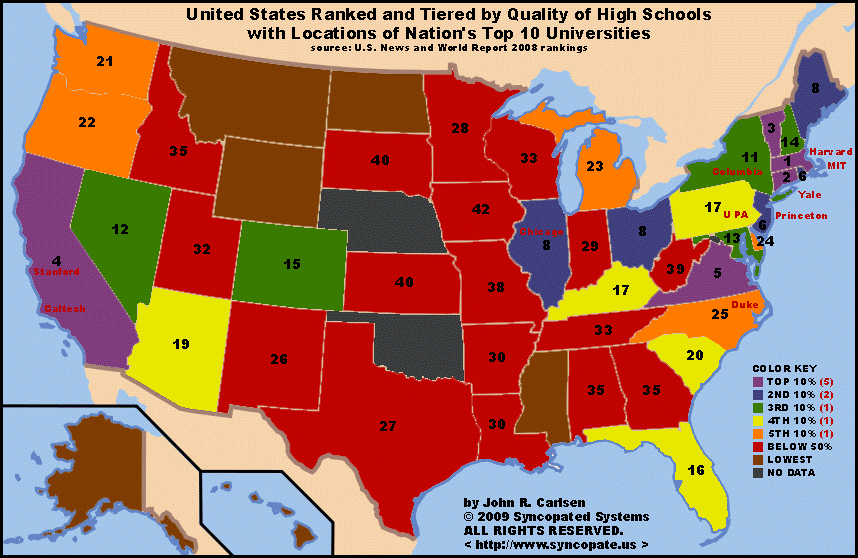
State-by-State Education Rankings: The United States of Inequality
Perhaps no factor better illustrates American educational complexity than the dramatic variations between states. The US effectively operates 50+ distinct education systems, each with different funding levels, standards, and outcomes.
Top-Performing States
Based on multiple metrics including test scores, graduation rates, and educational attainment:
- Massachusetts: Often compared to world-leading education systems like Singapore and Finland. If ranked independently, Massachusetts would place among the top 10 globally in PISA.
- New Jersey: Strong academic performance, high graduation rates, and substantial per-pupil spending
- Connecticut: Consistently high test scores and college readiness metrics
- New Hampshire: Highest adult literacy rates in the nation
- Vermont: Strong educational outcomes despite rural challenges
Interested in how specific states compare? Read our detailed analysis of where Florida ranks in K-12 education for a state-specific deep dive.
Struggling States
States facing significant educational challenges include:
- Mississippi: Consistently lowest rankings in national assessments, though recent improvements show promise
- Louisiana: Lowest adult literacy rates and below-average K-12 performance
- New Mexico: Persistent achievement gaps and funding challenges
- Alabama: Below-average graduation rates and test scores
- West Virginia: Economic challenges impact educational resources and outcomes
Factors Explaining State Variations
- Funding Disparities: Per-pupil spending ranges from under $8,000 in some states to over $25,000 in others
- Socioeconomic Factors: Poverty rates strongly correlate with educational outcomes
- Teacher Quality: States with higher teacher pay and certification standards generally perform better
- Policy Differences: Curriculum standards, testing requirements, and accountability measures vary widely
- Historical Context: Legacy effects of segregation and unequal investment persist in many regions
Understanding how poverty affects education is essential for comprehending these state-level disparities.
Why Does the US Underperform in Global Rankings?
Multiple interconnected factors explain why America, despite its wealth and investment, struggles to achieve top-tier educational outcomes at the K-12 level.
Structural Challenges
- Decentralized Governance: Unlike top-performing countries with unified national systems, the US has 13,000+ independent school districts with varying standards, curricula, and funding levels
- Socioeconomic Segregation: School quality often correlates with neighborhood wealth due to property tax-based funding, perpetuating inequality
- Child Poverty: The US has higher child poverty rates than most developed nations, and poverty directly impacts learning
- Healthcare Disparities: Limited access to healthcare affects student readiness and attendance
Educational System Issues
- Teacher Preparation and Status: Teaching isn't as prestigious or competitive as in top-performing nations like Finland or Singapore
- Curriculum Fragmentation: Lack of coherent national standards leads to inconsistent learning experiences
- Testing Focus: Emphasis on standardized testing may narrow curriculum and reduce deep learning
- Early Childhood Gaps: Limited access to quality preschool compared to other developed nations
Cultural and Social Factors
- Attitudes Toward Education: Some research suggests American culture emphasizes innate ability over effort, unlike Asian educational cultures
- Time Allocation: American students spend less time on homework and academic activities than peers in high-performing countries
- Extracurricular Balance: Emphasis on sports and activities, while valuable, may reduce academic focus
- Screen Time: Higher rates of entertainment media consumption may impact study habits
Students looking to overcome these challenges can benefit from understanding effective study strategies and developing consistent learning habits.
Efforts to Improve US Education Rankings
Recognizing the need for improvement, various initiatives at federal, state, and local levels aim to elevate American educational performance.
Federal Initiatives
- Every Student Succeeds Act (ESSA): Provides states flexibility while maintaining accountability for student outcomes
- STEM Education Investments: Increased funding for science, technology, engineering, and mathematics programs
- Early Childhood Education Expansion: Growing investment in pre-K programs
- Teacher Quality Programs: Initiatives to attract and retain high-quality educators
Understanding what the Department of Education does helps contextualize federal education policy and its impact on local schools.
State-Level Reforms
- Massachusetts has implemented rigorous standards and assessments leading to world-class performance
- Florida has expanded school choice options and third-grade reading requirements
- Tennessee has shown significant improvement through teacher evaluation reforms
- Texas has increased graduation requirements and early college programs
- California has invested heavily in reducing class sizes and increasing teacher pay
Innovative Approaches
- Personalized Learning: Technology-enabled approaches that adapt to individual student needs
- Competency-Based Education: Moving beyond seat time to mastery-based progression
- Career and Technical Education: Expanded vocational pathways providing alternatives to traditional academic tracks
- Social-Emotional Learning: Growing recognition that non-cognitive skills matter for success
What Parents and Students Can Do
While systemic reforms take time, families can take immediate steps to maximize educational success regardless of where they live or which school they attend.
For Parents
- Engage Early: Read to children from infancy and prioritize early learning experiences
- Monitor Progress: Use tools like our grade calculator to track academic performance
- Supplement Learning: Consider tutoring, educational programs, or enrichment activities
- Advocate: Stay involved in school decisions and educational policy discussions
- Create Learning Environment: Establish homework routines and limit screen time
For Students
- Take Challenging Courses: Enroll in AP, IB, or honors classes when available
- Develop Study Habits: Consistent effort matters more than natural ability for long-term success
- Seek Help Early: Use doubt solving resources when struggling with concepts
- Explore Interests: Connect learning to personal interests and career goals through career guidance
- Prepare for Tests: Strong standardized test performance opens doors to opportunities
Leveraging Technology and Resources
Modern technology offers unprecedented access to educational resources:
- Online Learning Platforms: Access courses from world-class institutions
- Educational Apps: Practice skills and track progress digitally
- Virtual Tutoring: Get personalized help regardless of geographic location—book a demo class to experience quality tutoring
- Study Resources: Access comprehensive study materials organized by subject and grade level
The Future of US Education Rankings
Looking ahead, several trends will shape whether the United States improves its global educational standing.
Reasons for Optimism
- Growing bipartisan support for early childhood education investment
- Innovative schools and districts proving high performance is achievable
- Technology enabling personalized learning at scale
- Increased awareness of international comparisons driving reform
- Rising educational attainment among younger generations
Ongoing Challenges
- Political polarization affecting education policy consensus
- Persistent funding inequities between districts
- Teacher shortages in many regions
- COVID-19 learning loss requiring years to address
- Competition from rapidly improving Asian education systems
Key Metrics to Watch
- PISA 2026 Results: Will provide updated international comparisons when released in 2026
- NAEP Scores: National assessments track domestic progress
- Graduation Rates: Continued improvement needed, particularly for underserved populations
- College Readiness: SAT, ACT, and AP participation and performance trends
- Career Readiness: Employment outcomes for graduates
Frequently Asked Questions
1. What is the current US ranking in global education?
The US ranks 34th in mathematics, 16th in science, and 7th in reading among 81 countries in PISA 2022. Among OECD nations specifically, the US places 28th in math, 12th in science, and 6th in reading. In higher education, however, the US leads globally with 7 universities in the world's top 10.
2. Why does the US rank so low in math compared to other subjects?
Several factors contribute to lower math performance, including less rigorous early math instruction compared to Asian countries, curriculum fragmentation across 13,000+ school districts, fewer specialized math teachers in elementary schools, and cultural attitudes that emphasize innate ability over effort in mathematics.
3. Which country has the best education system in 2026?
Singapore consistently ranks #1 in global education assessments, leading all PISA 2022 subjects with an average score of 560 points. Other top performers include Macau, Taiwan, Japan, South Korea, Estonia, and Hong Kong. Finland, once the global leader, has seen declining scores but remains highly regarded for educational equity.
4. How does US education spending compare to results?
The US spends $16,080 per public school student annually—fifth highest among OECD countries—yet ranks around 20th in overall PISA performance. Countries like Estonia and Poland achieve better results with half the per-student spending, suggesting American education funding is not efficiently translated into outcomes.
5. Are US universities still the best in the world?
Yes, US universities continue to dominate global rankings with 7 institutions in the world's top 10 and 38 in the top 100. However, this dominance is gradually eroding as Asian universities improve. The number of US universities in the top 500 has declined from 125 in 2018 to 102 in 2026.
6. Why do some US states perform much better than others?
State performance varies dramatically due to funding disparities (ranging from $8,000 to $25,000+ per pupil), socioeconomic factors, teacher quality, policy differences, and historical investment patterns. Massachusetts, if ranked independently, would place among the world's top 10 in PISA, while states like Mississippi lag significantly behind.
7. How does US adult literacy compare globally?
The US ranks 14th among 31 countries in adult literacy according to PIAAC 2023. Only 79% of American adults are considered literate, with 21% (43 million people) classified as functionally illiterate. Adult literacy scores have declined 12 points since 2017, from 271 to 258.
8. What is PISA and why does it matter?
PISA (Programme for International Student Assessment) is an international assessment administered every three years by the OECD to 15-year-olds in 81 countries. It measures literacy, mathematics, and science skills, providing the most comprehensive global comparison of educational outcomes. PISA results influence education policy worldwide.
9. How can the US improve its education rankings?
Experts recommend several reforms: increased investment in early childhood education, reducing funding inequities between districts, elevating the teaching profession's status and compensation, implementing more rigorous and coherent national standards, expanding access to quality preschool, and addressing childhood poverty and its effects on learning.
10. Does US education ranking affect college admissions?
Global rankings primarily affect policy discussions rather than individual college admissions. US colleges evaluate students based on grades, test scores, activities, and essays rather than national rankings. However, students from high-performing states or schools may have advantages in academic preparation for competitive colleges.
11. Are private schools in the US better than public schools?
Research shows mixed results. While private school students often score higher on assessments, much of this difference disappears when controlling for socioeconomic factors. High-performing public schools, particularly in wealthy suburbs and states like Massachusetts, often outperform private schools. Quality varies significantly within both sectors.
12. How has COVID-19 affected US education rankings?
COVID-19 caused significant learning loss across all countries, but recovery has been uneven. US PISA math scores dropped 13 points between 2018 and 2022, though 25 of 37 OECD countries experienced similar declines. Full recovery may take years, and the pandemic exacerbated existing inequalities between advantaged and disadvantaged students.
13. What role do teachers play in education rankings?
Teacher quality is the most important in-school factor affecting student outcomes. Countries like Singapore and Finland attract top graduates to teaching through competitive salaries, rigorous preparation, and high social status. The US struggles with teacher shortages and lower average qualifications compared to top-performing nations.
14. How do US charter schools affect education rankings?
Charter school impacts vary widely. Some, like KIPP and Success Academy networks, achieve outstanding results with disadvantaged students. However, charter schools on average perform comparably to traditional public schools. They haven't significantly moved national rankings but provide options in some underserved areas.
15. What can students do to excel despite system limitations?
Students can take challenging courses (AP, IB, dual enrollment), develop consistent study habits, seek help early when struggling, use supplemental resources like online courses and tutoring, connect learning to personal interests and career goals, and focus on developing critical thinking and problem-solving skills that transcend standardized measures.
Conclusion: America's Educational Standing in Perspective
The question of where the United States ranks in global education defies simple answers. America occupies a unique position: struggling at the K-12 level compared to international peers while maintaining undisputed leadership in higher education. This paradox reflects the country's decentralized educational governance, vast socioeconomic disparities, and historical investment patterns.
In PISA 2022, American 15-year-olds ranked 34th in mathematics, 16th in science, and 7th in reading among 81 participating countries. These results, while concerning, mask enormous variation—Massachusetts performs at world-class levels while some states lag decades behind. The US spends more per student than almost any other nation, yet countries achieving better results often invest far less per pupil.
Yet American universities remain the envy of the world. Seven US institutions rank among the global top 10, and American research universities drive innovation in science, technology, medicine, and countless other fields. International students still flock to American campuses, drawn by unparalleled resources and opportunities.
For students and families, these rankings ultimately matter less than individual effort and choices. Regardless of where you live or which school you attend, success remains achievable through dedication, effective study strategies, and leveraging available resources. The AI Study Guide Maker can help create personalized learning plans, while our comprehensive study resources provide materials organized by subject and grade level.
The future of American education will be shaped by policy choices, community investment, and individual commitment. While systemic challenges persist, every student has the power to exceed expectations through focused effort and the right support. Whether you're preparing for college, exploring career options, or simply seeking to learn and grow, the resources and opportunities exist to achieve your educational goals.
Ready to take your education to the next level? Book a free demo class with our expert tutors and discover how personalized support can help you achieve academic success—regardless of where national rankings stand.