Why Should Education Be Free? Complete 2026 Guide to Universal Access
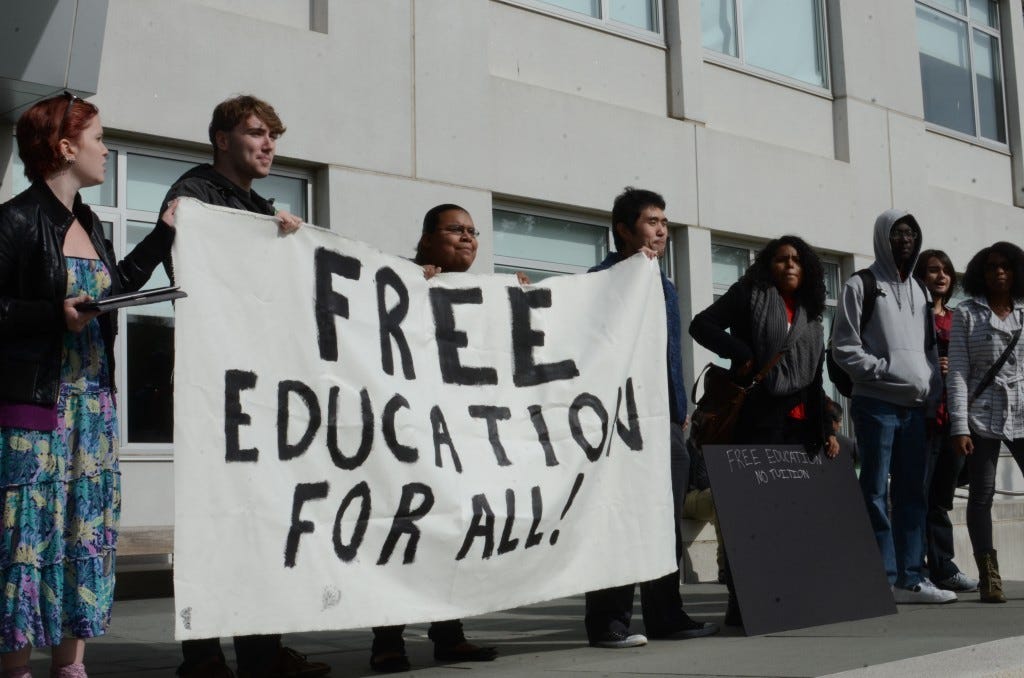
The debate over free education has intensified globally, with millions of students, parents, educators, and policymakers questioning whether access to quality education should come with a price tag. As tuition costs continue to soar and student debt reaches unprecedented levels, the argument for making education free has never been more compelling. This comprehensive guide explores the multifaceted reasons why education should be free, examining economic, social, and moral arguments that support universal access to learning.
From ancient civilizations that recognized education as a public good to modern nations that have successfully implemented free education systems, history provides powerful evidence for the transformative potential of accessible learning. According to UNESCO, approximately 244 million children and youth remain out of school globally, with financial barriers being a primary obstacle. This reality demands a serious examination of why education should be universally available at no cost to learners and their families.
Whether you are a student struggling with education costs, a parent worried about your children's future, or simply someone interested in understanding the economics and ethics of education policy, this article will provide you with a thorough analysis of why free education matters and how it could reshape society for the better.
Understanding the Case for Free Education
Before diving into specific reasons, it is essential to understand what we mean by free education and the philosophical foundations supporting this concept. Free education refers to publicly funded schooling where students pay no tuition fees, with costs covered by government revenues through taxation. This model recognizes education as a fundamental right rather than a commodity to be purchased.
The concept aligns with Article 26 of the Universal Declaration of Human Rights, which states that everyone has the right to education and that elementary education shall be compulsory and free. Understanding why education is important helps frame why removing financial barriers to accessing it matters so deeply.
Overview: Key Arguments for Free Education
| Category | Key Arguments | Primary Beneficiaries |
|---|---|---|
| Economic | Higher GDP, increased tax revenue, reduced welfare costs | Governments, businesses, society |
| Social Equality | Equal opportunities, reduced inequality, social mobility | Low-income families, marginalized communities |
| Individual Benefits | No student debt, career freedom, mental health | Students, graduates, families |
| Democratic & Civic | Informed citizenry, stronger democracy, civic engagement | Society as a whole |
| Innovation & Progress | More researchers, diverse talent pool, accelerated discovery | Scientific community, future generations |
Education as a Fundamental Human Right
The most powerful argument for free education rests on the principle that education is a fundamental human right, not a privilege. Just as we do not charge people for basic healthcare in many countries, or expect citizens to pay for police protection, education serves a fundamental societal function that should be universally accessible.
The United Nations Convention on the Rights of the Child, ratified by 196 countries, explicitly recognizes education as a right. When education costs money, this right becomes conditional on wealth—a contradiction that undermines the very foundation of human rights principles. As Nelson Mandela eloquently stated: Education is the most powerful weapon which you can use to change the world. If education holds such transformative power, denying access based on economic status becomes morally indefensible.
Historical Precedents for Education as a Right
Throughout history, societies have recognized the importance of accessible education. Ancient Athens provided free education for citizens. The Prussian education system in the 18th century established mandatory, free public schooling that influenced education systems worldwide. Today, countries like Germany, Norway, Finland, and Sweden offer tuition-free higher education, demonstrating that treating education as a right is both practical and achievable.
The Economic Case for Free Education
While free education requires significant public investment, the economic returns far outweigh the costs. Economists have consistently demonstrated that education is one of the highest-yield investments a society can make. According to the World Bank, each additional year of schooling increases individual earnings by approximately 10%, while generating substantial returns for the broader economy.
Higher Tax Revenues and Economic Growth
Educated workers earn higher wages and consequently pay more taxes throughout their careers. A study by the Georgetown University Center on Education and the Workforce found that college graduates earn approximately $1.2 million more over their lifetime than high school graduates. This increased earning translates directly into higher tax contributions that can more than offset the initial investment in free education.
Return on Investment: Education Spending
| Investment Type | Average Cost | Lifetime Return | ROI |
|---|---|---|---|
| Early Childhood Education | $10,000/year | $7-12 per $1 invested | 700-1200% |
| K-12 Public Education | $13,600/year (US avg) | $3-5 per $1 invested | 300-500% |
| Higher Education (Public) | $40,000-100,000 total | $1.2M+ lifetime earnings increase | 300-400% |
| Vocational Training | $15,000-30,000 total | $500K+ lifetime earnings increase | 400-600% |
For those exploring different career paths and their educational requirements, understanding what education you need to be an engineer or other professions helps illustrate how educational investments translate into career opportunities and economic contributions.
Reduced Social Welfare Costs
Education reduces dependency on social welfare programs. According to research from the RAND Corporation, each high school graduate saves taxpayers an average of $30,000 in reduced welfare costs over their lifetime. College graduates are significantly less likely to require government assistance, experience unemployment, or face housing insecurity. When education is free, more people complete their studies, reducing long-term social welfare expenditures.
Lower Healthcare Costs
Education and health are deeply interconnected. Studies consistently show that more educated individuals make healthier lifestyle choices, have lower rates of chronic disease, and live longer. The Robert Wood Johnson Foundation reports that adults without high school diplomas die 9 years earlier on average than college graduates. Free education that enables more people to complete higher levels of schooling would generate substantial healthcare savings for society.
Breaking the Cycle of Poverty and Inequality
One of the most compelling arguments for free education is its potential to break the intergenerational cycle of poverty. When education costs money, children from low-income families face nearly insurmountable barriers to advancement. The relationship between poverty and education creates a vicious cycle where disadvantaged families remain trapped across generations.
Currently, a child born into the top income quintile has approximately a 77% chance of earning a college degree, while a child from the bottom quintile has only a 9% chance. This disparity perpetuates economic inequality and wastes human potential. Free education would level the playing field, allowing talented individuals from all backgrounds to develop their abilities and contribute to society.
Social Mobility Statistics
- First-generation college students: Only 11% complete a bachelors degree within 6 years, compared to 55% of students whose parents have degrees
- Low-income students: 52% leave college with debt exceeding $30,000, often deterring enrollment
- Countries with free education: Show 30-40% higher rates of intergenerational income mobility
- Financial aid impact: Each $1,000 increase in financial aid increases college enrollment by 3-5 percentage points
Quote from Education Advocate
◆The function of education is to teach one to think intensively and to think critically. Intelligence plus character—that is the goal of true education. — Martin Luther King Jr.
Eliminating the Student Debt Crisis
Student debt has reached crisis proportions in many countries, particularly in the United States where total student loan debt exceeds $1.75 trillion, affecting over 45 million borrowers. This debt burden has profound consequences for individuals and the economy as a whole.
The Impact of Student Debt
| Impact Area | Statistics | Long-term Consequences |
|---|---|---|
| Home Ownership | 83% of non-buyers cite student debt | Delayed wealth building, reduced economic stability |
| Retirement Savings | 73% delay retirement contributions | Inadequate retirement funds, continued work into old age |
| Marriage and Family | 29% delay marriage, 43% delay having children | Demographic shifts, reduced birth rates |
| Career Choices | 60% take jobs outside their field for pay | Talent misallocation, reduced job satisfaction |
| Mental Health | 86% report debt-related stress | Anxiety, depression, reduced quality of life |
| Entrepreneurship | 25% less likely to start businesses | Reduced innovation, fewer job creators |
Free education would eliminate this debt burden entirely, freeing graduates to make career choices based on passion and aptitude rather than debt obligations. This would benefit not only individuals but also society by ensuring that public-interest careers like teaching, social work, and public service remain attractive options for talented graduates.
Promoting True Equal Opportunity
In a society that values meritocracy, education should be the great equalizer. However, when education costs money, we create a system where success depends more on family wealth than individual talent and effort. Free education would ensure that every child, regardless of their parents income, has an equal opportunity to develop their potential.
Consider this: two equally talented students—one from a wealthy family and one from a low-income background—face dramatically different educational trajectories. The wealthy student attends better-funded schools, receives private tutoring, does not worry about college costs, and graduates debt-free. The low-income student attends underfunded schools, works part-time jobs instead of studying, and either forgoes college or graduates with crippling debt. This is not meritocracy; it is plutocracy.
Addressing Systemic Inequalities
Free education helps address systemic inequalities that have accumulated over generations. Understanding what curriculum in education means reveals how educational content and access shape opportunities. When education is free, institutions can focus on providing quality education to all students rather than catering primarily to those who can pay.
- Racial equity: Black and Hispanic students graduate with 25% more debt than white students on average
- Gender equity: Women hold nearly two-thirds of student loan debt despite earning less than men
- Geographic equity: Rural students face higher barriers to accessing higher education
- Disability equity: Students with disabilities face additional costs that free education could help offset
Strengthening Democracy and Civic Participation
A functioning democracy requires an educated citizenry capable of making informed decisions, evaluating evidence, and participating meaningfully in civic life. Thomas Jefferson, one of democracys great champions, argued that an educated citizenry is a vital requisite for our survival as a free people. Free education ensures that democratic participation is not limited to those who can afford quality schooling.
Education and Democratic Participation
Research consistently demonstrates that education increases civic engagement. College graduates are 40% more likely to vote and twice as likely to volunteer in their communities. They are also more likely to participate in local government, serve on boards, and engage in community organizations. When education is accessible to all, democracy becomes stronger and more representative.
Education also develops critical thinking skills essential for evaluating political claims, recognizing misinformation, and understanding complex policy issues. In an era of fake news and information overload, these skills are more important than ever for maintaining healthy democratic discourse. The development of character education alongside academic learning helps create citizens who value ethics, responsibility, and civic virtue.
Driving Innovation and Economic Competitiveness
In the knowledge economy, a nations competitiveness depends increasingly on the education level of its workforce. Countries with higher education attainment rates tend to have more innovative economies, stronger GDP growth, and greater global competitiveness. Free education expands the talent pool, ensuring that financial barriers do not prevent the next great inventor, scientist, or entrepreneur from reaching their potential.
Global Competitiveness and Education
| Country | Higher Ed Cost | Degree Attainment | Innovation Index Rank |
|---|---|---|---|
| Germany | Free | 33% | #8 |
| Norway | Free | 48% | #19 |
| Finland | Free | 47% | #6 |
| Sweden | Free | 47% | #2 |
| United States | $10,000-60,000/yr | 50% | #3 |
| United Kingdom | 9,250 GBP/yr ($11,500) | 52% | #4 |
Notice that countries with free education maintain strong innovation rankings while achieving high education attainment rates without saddling students with debt. These nations demonstrate that free education is economically viable and contributes to national competitiveness.
Unlocking Hidden Talent
How many potential scientists, doctors, engineers, and innovators never reach their potential because they cannot afford education? Free education would unlock this hidden talent pool, benefiting society through increased innovation and discovery. For those interested in STEM careers, understanding the education required to become a nurse practitioner or other healthcare professionals illustrates the significant educational investment required—investment that should not be limited to those with financial means.
Successful International Models of Free Education
Critics often claim that free education is impractical or economically unsustainable. However, numerous countries have successfully implemented free or nearly free higher education systems, demonstrating that it is not only possible but beneficial.
Germany: A Success Story
Germany abolished university tuition fees in 2014, making higher education free for both domestic and international students. Since then, university enrollment has increased by 27%, with no decline in educational quality. German universities continue to rank among the worlds best, and the country maintains one of the strongest economies in Europe. The total cost of this policy is approximately 22 billion euros annually, funded through taxes—a fraction of the countrys 4.5 trillion euro GDP.
Nordic Countries: The Gold Standard
Finland, Norway, Sweden, and Denmark offer free higher education and even provide living stipends to students. These countries consistently rank among the happiest, most innovative, and most economically competitive nations in the world. Their investment in education has paid dividends through high productivity, low inequality, and strong social cohesion.
- Finland: Consistently ranks among top education systems globally; teachers are highly respected and well-compensated
- Norway: Offers free education at all levels, including for international students; high quality of life rankings
- Sweden: Pioneers innovative teaching methods; home to numerous global companies and startups
- Denmark: Students receive grants for living expenses; strong emphasis on lifelong learning
Benefits for Physical and Mental Health
Education has profound effects on both physical and mental health. Free education would extend these health benefits to all segments of society, reducing health disparities and improving overall public health outcomes. The importance of physical education in schools demonstrates how education contributes directly to physical wellness from an early age.
Health Outcomes by Education Level
| Health Indicator | College Graduate | High School Only | Less Than HS |
|---|---|---|---|
| Life Expectancy at 25 | +56 years | +51 years | +47 years |
| Obesity Rate | 25% | 36% | 38% |
| Smoking Rate | 7% | 21% | 23% |
| Regular Exercise | 58% | 38% | 31% |
| Depression Rate | 6% | 12% | 15% |
The relationship between education and mental health is particularly significant. Student debt has been linked to higher rates of anxiety, depression, and psychological distress. A study published in the Journal of College Student Development found that students with high levels of debt were three times more likely to experience psychological distress. Free education would eliminate this mental health burden while ensuring more people have access to the psychological benefits of education.
Career Freedom and Pursuing Passions
When students graduate with significant debt, they often feel compelled to pursue high-paying careers regardless of their interests or talents. Free education would give graduates the freedom to pursue careers based on passion and aptitude rather than financial necessity. This benefits society by ensuring that talented individuals enter fields where they can make the greatest contribution.
Public Service and Essential Professions
Many essential professions—teaching, social work, public health, environmental science—offer modest salaries that make them difficult to pursue with significant student debt. Free education would make these careers more accessible, addressing critical shortages in public service sectors. Understanding how to become a physical education teacher or other teaching roles shows the significant education investment required for careers that serve vital social functions but may not offer high salaries.
- Teacher shortages: The US faces a shortage of over 300,000 teachers, exacerbated by low salaries relative to educational debt
- Social workers: Average salary of $50,000 vs. average debt of $40,000 for MSW graduates
- Public defenders: Critical for justice system, yet law school debt averages $130,000
- Nonprofit workers: Essential for civil society, but debt makes nonprofit careers unviable for many
Reducing Crime and Incarceration
Education is one of the most effective crime prevention tools available. Research consistently shows that increasing educational attainment reduces crime rates across all categories. Free education would extend this protective effect to all segments of society, potentially saving billions in criminal justice costs while improving community safety.
Education and Crime Prevention Statistics
- High school graduation: A 10% increase in high school graduation rates reduces murder and assault rates by approximately 20%
- Incarceration rates: 68% of state prison inmates lack a high school diploma
- Cost comparison: Average annual cost of incarceration ($35,000) vs. public college tuition ($10,000)
- Recidivism: Prison education programs reduce recidivism by 43%
◆Education costs money, but then so does ignorance. — Sir Claus Moser
The Critical Importance of Free Early Childhood Education
While much of the free education debate focuses on higher education, early childhood education may offer the highest returns on investment. Nobel laureate economist James Heckman has demonstrated that high-quality early childhood programs generate returns of $7-12 for every $1 invested, making free early education perhaps the most economically sound policy investment available.
Understanding the 12 core early childhood education units reveals the comprehensive approach needed for effective early education. When quality early childhood programs are made freely available, children from all backgrounds start school on more equal footing, reducing achievement gaps that often persist throughout life.
Long-term Benefits of Early Education
| Outcome Measure | With Early Education | Without Early Education |
|---|---|---|
| High School Graduation | 77% | 60% |
| Employed at 40 | 76% | 62% |
| Earning $20K+ at 40 | 60% | 40% |
| Arrested by 40 | 36% | 55% |
| Home Ownership at 40 | 37% | 28% |
Addressing Common Arguments Against Free Education
While the case for free education is compelling, it is important to address common objections thoughtfully. Understanding and responding to these arguments strengthens the overall case for universal access to education.
Free education is not really free—taxpayers pay for it
This is technically correct but misses the broader point. Education is an investment that generates returns exceeding its costs. When we say education should be free, we mean free at the point of access—just like roads, firefighters, and public parks. The economic benefits of an educated population (higher tax revenues, lower welfare costs, reduced crime) more than justify the investment. Additionally, progressive taxation ensures that those who benefit most from education contribute proportionally more to funding it.
Free education will decrease quality
Evidence from countries with free education systems contradicts this claim. German universities, despite being tuition-free, maintain high global rankings. Finnish schools, entirely free, consistently rank among the worlds best. Quality depends on funding levels and educational policy, not whether students pay tuition. In fact, when institutions are not competing for tuition-paying students, they can focus more resources on educational quality rather than marketing and amenities.
People do not value what they get for free
This argument assumes that financial cost is the primary way people value education. In reality, students value education for the opportunities it provides, the knowledge gained, and the personal growth experienced. Countries with free education do not see students treating education carelessly; graduation rates often improve when financial barriers are removed. Moreover, admission standards and academic requirements ensure that students remain committed to their studies.
We cannot afford it
This argument ignores both the returns on educational investment and the hidden costs of the current system. The US, for example, spends approximately $1.5 trillion on defense over a decade but debates whether it can afford free public college, estimated at $79-80 billion annually. Countries with lower GDPs per capita manage to provide free education. It is a matter of priorities, not affordability.
How Free Education Could Work: Practical Implementation
Implementing free education requires thoughtful policy design, but numerous models exist. The most effective approaches combine adequate funding, quality assurance mechanisms, and equitable access provisions.
Funding Mechanisms
- Progressive Income Tax: Graduates who benefit most from education contribute back through higher lifetime tax payments
- Financial Transaction Tax: A small tax on stock trades could fund significant educational investment
- Corporate Education Tax: Businesses benefit from educated workers and could contribute to education funding
- Redirected Military Spending: A small percentage shift could fund comprehensive free education
- Carbon Tax Revenue: Environmental taxes could fund educational investment in future generations
Quality Assurance
Free education does not mean lower standards. Quality can be maintained through robust accreditation systems, competitive faculty salaries, adequate per-student funding, and accountability measures. Finland demonstrates that free education and high quality are not mutually exclusive—in fact, removing financial barriers allows institutions to focus resources on educational excellence rather than revenue generation.
Benefits for Families and Parents
The burden of education costs falls heavily on families. Many parents sacrifice their own financial security—raiding retirement savings, taking second jobs, or accumulating debt—to finance their childrens education. Free education would relieve this burden and strengthen family financial stability.
- Parent PLUS loans: Parents have borrowed over $100 billion for childrens education, often at high interest rates
- Retirement impact: 51% of parents who help pay for college say it hurt their retirement savings
- Family stress: 72% of families report education costs as a source of significant stress
- Sibling impact: In many families, older childrens education costs limit opportunities for younger siblings
For parents seeking to support their childrens education in the current system, resources like our career guidance services can help families make informed decisions about educational pathways and investments.
A Long-term Vision: Education for All
Imagine a society where every child, regardless of family wealth, could access quality education from preschool through graduate school. Where career choices are based on passion and aptitude, not debt obligations. Where innovation flourishes because talented individuals from all backgrounds can pursue research and discovery. Where democracy thrives because all citizens are educated enough to participate meaningfully in civic life.
This vision is not utopian—it is the reality in several countries and an achievable goal for any society willing to prioritize education. The transformation required is significant but not impossible. It begins with recognizing that education is too important to be treated as a commodity and too beneficial to society to be rationed based on ability to pay.
◆The whole purpose of education is to turn mirrors into windows. — Sydney J. Harris
Frequently Asked Questions About Free Education
Would free education include private institutions?
Most free education proposals focus on public institutions. Private institutions would continue to operate independently, though some proposals include subsidies for low-income students at private schools. The key goal is ensuring that quality education is accessible through public institutions at no direct cost to students.
What about living expenses and other costs?
Comprehensive free education proposals often include provisions for living expenses, either through grants or subsidized housing. Countries like Denmark and Sweden provide living stipends alongside free tuition. Even without such provisions, eliminating tuition significantly reduces the financial burden of education.
Will free education lead to overcrowding in universities?
Increased demand can be managed through expanded capacity, online learning options, and academic admission standards. Germany and other countries with free education have not experienced unmanageable overcrowding. Additionally, free vocational training provides alternatives to university education for students whose interests lie elsewhere.
How would free education affect teachers and professors?
Properly funded free education systems can maintain or improve faculty compensation. In Finland, teachers are well-compensated and highly respected. Free education shifts focus from revenue generation to educational quality, potentially benefiting educators through better working conditions and more resources for teaching.
Is free education realistic in the current political climate?
Support for free education has grown significantly in recent years. Several US states have implemented free community college programs, and countries worldwide continue to expand educational access. While political challenges exist, the growing recognition of educations importance and the burden of student debt creates momentum for change.
Getting Help with Your Educational Journey Today
While we work toward a future of free education, there are resources available to help navigate the current educational landscape. Whether you are struggling with coursework, planning your academic path, or seeking guidance on career options, support is available.
If you are facing challenges in your studies, our doubt solving services can provide immediate help with academic questions. For more comprehensive support, consider booking a demo class to experience personalized tutoring that can help you maximize your educational outcomes regardless of the costs you face.
For students looking to study more effectively, our AI Study Guide Maker can help create personalized study plans that maximize learning efficiency—making the most of every educational opportunity you have access to.
Conclusion: Education as Investment in Our Collective Future
The case for free education rests on both moral and practical foundations. Education is a human right, an economic investment, a tool for equality, and a cornerstone of democracy. The barriers created by educational costs—whether preventing access entirely or burdening graduates with debt—undermine all of these benefits.
Countries around the world have demonstrated that free education is achievable and beneficial. The economic returns exceed the costs. The social benefits strengthen communities. The individual benefits transform lives. The only question remaining is whether we have the collective will to make this investment in our shared future.
As you consider these arguments, remember that the debate over free education is not just about policy—it is about what kind of society we want to build. Do we want a society where opportunity is determined by accident of birth, or one where every individual can develop their potential? The answer should be clear.
Key Takeaways
- Education is a fundamental human right that should not be conditional on wealth
- Free education generates economic returns exceeding its costs through higher tax revenues and reduced social welfare spending
- Student debt burdens individuals and constrains economic growth
- Free education promotes equal opportunity and breaks the cycle of poverty
- Educated citizens strengthen democracy through informed participation
- Multiple countries have successfully implemented free education systems
- Early childhood education offers particularly high returns on investment
- Free education would improve public health outcomes and reduce crime
- Implementation is achievable through various funding mechanisms
- The benefits extend to families, communities, and society as a whole
The path to free education may be challenging, but the destination—a society where knowledge and opportunity are available to all—is worth the journey. Education transformed societies in the past, and universal access to education can do so again. The question is not whether we can afford free education; it is whether we can afford not to provide it.