What Is IEP in Education? Complete 2026 Guide to Individualized Education Programs
Key Takeaways: Understanding IEP in Education
- IEP stands for Individualized Education Program: A legally binding document that outlines specialized instruction, services, and accommodations for students with disabilities in public schools.
- Protected by federal law (IDEA): The Individuals with Disabilities Education Act requires schools to provide a free appropriate public education (FAPE) to eligible students through IEPs.
- Tailored to each student: Every IEP is customized based on the individual student's unique strengths, challenges, and educational needs.
- Team collaboration is essential: Parents, teachers, specialists, and sometimes the student work together to develop and implement the IEP.
- Annual review and updates: IEPs must be reviewed at least once a year, with comprehensive reevaluations every three years to ensure continued appropriateness.
Introduction: What Is an IEP and Why Does It Matter?
For millions of families across the United States, the term IEP represents hope, support, and a pathway to educational success for their children with disabilities. An Individualized Education Program (IEP) is far more than just paperwork—it is a comprehensive roadmap designed to ensure that students with disabilities receive the specialized instruction and support they need to thrive academically, socially, and emotionally.
According to the National Center for Education Statistics, approximately 7.3 million students (or about 15% of all public school students) received special education services under the Individuals with Disabilities Education Act (IDEA) during the 2021-22 school year. Each of these students has an IEP that guides their educational journey. Understanding what an IEP is, how it works, and how to advocate effectively within the IEP process is essential knowledge for parents, educators, and anyone involved in supporting students with special needs.
Whether you are a parent who just learned your child may need special education services, a teacher working to support diverse learners, or someone exploring careers in special education, this comprehensive guide will provide you with everything you need to know about IEPs in education.
What Is an IEP? Definition and Overview
An Individualized Education Program (IEP) is a written document developed for each public school student who qualifies for special education services under the Individuals with Disabilities Education Act (IDEA). This legally binding document serves as both a blueprint for the student's educational experience and a contract between the school and the family.
The Legal Foundation of IEPs
The IEP process is mandated by federal law through IDEA, originally passed in 1975 as the Education for All Handicapped Children Act. This landmark legislation established that:
- Free Appropriate Public Education (FAPE): Every eligible child with a disability is entitled to a free education that is appropriate to their individual needs.
- Least Restrictive Environment (LRE): Students with disabilities should be educated alongside their non-disabled peers to the maximum extent appropriate.
- Individualized services: Education must be tailored to meet each student's unique needs, not a one-size-fits-all approach.
- Parent participation: Parents are equal partners in the IEP process and have specific procedural rights.
- Due process protections: Families have the right to dispute decisions and seek resolution through formal procedures.
Understanding the legal framework is crucial because the IEP is not merely a recommendation—it is a legally enforceable document. Schools are obligated to provide the services and supports outlined in the IEP. If you are interested in pursuing a career that involves working with IEPs, learning about how to get special education certification is an important first step.
Who Qualifies for an IEP?
Not every student who struggles in school qualifies for an IEP. To be eligible, a student must meet two criteria:
- Have a qualifying disability: The student must have one of the 13 disability categories recognized under IDEA.
- Need special education services: The disability must adversely affect educational performance to the extent that specialized instruction is required.
The 13 disability categories under IDEA include:
- Autism spectrum disorder
- Deaf-blindness
- Deafness
- Emotional disturbance
- Hearing impairment
- Intellectual disability
- Multiple disabilities
- Orthopedic impairment
- Other health impairment (including ADHD)
- Specific learning disability (such as dyslexia)
- Speech or language impairment
- Traumatic brain injury
- Visual impairment including blindness
It is important to note that having a diagnosis alone does not automatically qualify a student for an IEP. The evaluation team must determine that the disability impacts the student's ability to access and benefit from general education without specialized support.
Essential Components of an IEP Document
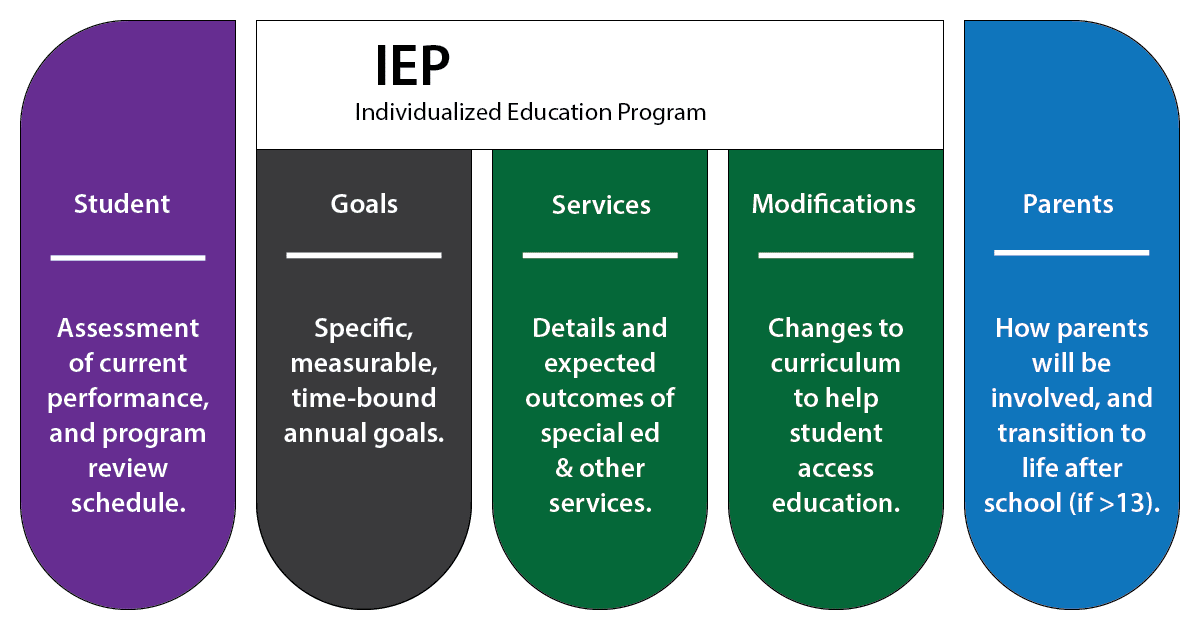
Federal law requires that every IEP contain specific components to ensure comprehensive planning and accountability. Understanding these components helps parents and educators collaborate effectively to support student success.
Present Levels of Academic Achievement and Functional Performance (PLAAFP)
The PLAAFP section is the foundation of the entire IEP. It describes the student's current abilities, strengths, and challenges in both academic and functional areas. This section should include:
- Current academic performance: Reading levels, math skills, writing abilities, and other academic metrics based on assessments and classroom data.
- Functional performance: Daily living skills, social-emotional functioning, communication abilities, and behavior patterns.
- How the disability affects learning: A clear explanation of how the student's disability impacts their participation in general education.
- Baseline data: Specific, measurable data points that will be used to track progress toward goals.
The PLAAFP section sets the stage for everything else in the IEP—goals, services, and accommodations all flow from this comprehensive picture of the student. If you are helping a student prepare for assessments that inform the PLAAFP, our study resources can provide valuable support.
Annual Goals and Objectives
Every IEP must include measurable annual goals that describe what the student is expected to achieve within one year. Effective IEP goals follow the SMART framework:
- Specific: Clearly define what the student will accomplish.
- Measurable: Include criteria for measuring progress and achievement.
- Achievable: Goals should be ambitious yet realistic given the student's current levels.
- Relevant: Goals should address areas of need identified in the PLAAFP.
- Time-bound: Goals are designed to be achieved within the IEP year.
For students with significant disabilities, short-term objectives or benchmarks may also be required, breaking down annual goals into smaller, sequential steps.
Special Education and Related Services
This section specifies all the specialized instruction and support services the student will receive:
- Special education instruction: Direct teaching by a special education teacher, either in a separate setting or within the general education classroom.
- Related services: Support services such as speech-language therapy, occupational therapy, physical therapy, counseling, or transportation.
- Service delivery details: Frequency, duration, and location of each service (e.g., 30 minutes of speech therapy twice weekly in the therapy room).
- Service providers: Identification of qualified personnel who will deliver services.
Understanding related services is particularly important for families. For example, assistive technology in special education can be a crucial related service that helps students access the curriculum and communicate effectively.
Accommodations and Modifications
Accommodations and modifications are adjustments made to help students access learning and demonstrate knowledge. While often used interchangeably, they are distinct:
- Accommodations: Changes in how a student learns or demonstrates learning without changing what they learn. Examples include extended time on tests, preferential seating, or use of audiobooks.
- Modifications: Changes to what the student is expected to learn or demonstrate. Examples include reduced assignments, simplified reading materials, or alternative assessments.
Common accommodations in IEPs include:
- Extended time for tests and assignments
- Preferential seating (near teacher, away from distractions)
- Use of calculators or other tools
- Breaks during extended tasks
- Reduced homework load
- Audio or visual supports
- Graphic organizers and study guides
- Testing in a separate, quiet setting
- Read-aloud for tests and assignments
- Assistive technology devices and software
Participation in General Education
The IEP must explain the extent to which the student will participate in general education classes and activities with non-disabled peers. This reflects the Least Restrictive Environment (LRE) principle. The team must justify any removal from the general education setting and document why the student's needs cannot be met with supplementary aids and services in regular classes.
Assessment Participation
This section addresses how the student will participate in state and district-wide assessments:
- Standard assessments with accommodations: Most students take regular tests with appropriate accommodations listed in their IEP.
- Alternate assessments: Students with significant cognitive disabilities may take alternate assessments designed for their ability levels.
Understanding assessment options helps families ensure their child is appropriately evaluated. If you need help preparing your child for assessments, our doubt solving services can provide targeted academic support.
Transition Planning
Beginning at age 16 (or earlier in some states), the IEP must include transition planning to prepare the student for life after high school. Transition plans address:
- Post-secondary education goals: Plans for college, vocational training, or continuing education.
- Employment goals: Career interests, work experiences, and job-related skills training.
- Independent living goals: Skills for daily living, self-advocacy, and community participation.
- Agency involvement: Connections to adult service agencies that may provide support after graduation.
Effective transition planning is crucial for helping students move successfully from school to adult life. For students exploring career paths, our career guidance services can help identify interests and strengths that inform transition goals.
The IEP Process: From Referral to Implementation
The IEP process involves multiple steps, each with specific timelines and requirements. Understanding this process helps families navigate the system effectively and advocate for their child's needs.
Step 1: Referral and Evaluation
The journey to an IEP typically begins with a referral for evaluation. This can be initiated by:
- Parents or guardians who have concerns about their child's development or learning
- Teachers who observe learning or behavioral challenges
- Other school personnel such as counselors or administrators
- Healthcare providers who identify developmental concerns
- The Child Find system, which requires schools to identify children who may need services
Once a referral is made, the school has specific timelines (usually 60 days) to complete a comprehensive evaluation. Parents must provide written consent before any evaluation occurs. The evaluation assesses all areas of suspected disability and must be conducted by qualified professionals using valid, non-discriminatory assessment tools.
Step 2: Eligibility Determination
After the evaluation is complete, a team of qualified professionals and the parents meet to determine whether the child is eligible for special education services. This team reviews all evaluation data and decides:
- Whether the child has a qualifying disability under IDEA
- Whether the disability adversely affects educational performance
- Whether the child needs special education and related services
If the child is found eligible, the school must develop an IEP within 30 days of the eligibility determination.
Step 3: IEP Development Meeting
The IEP meeting brings together a team to develop the student's program. Required team members include:
- Parents or guardians: Essential partners in the process with equal decision-making authority.
- General education teacher: Provides insight into grade-level curriculum and classroom expectations.
- Special education teacher: Brings expertise in specialized instruction and interventions.
- School district representative: Has authority to commit district resources and ensure IEP implementation.
- Evaluation specialist: Can interpret evaluation results and their educational implications.
- Related service providers: When appropriate, therapists and specialists who work with the student.
- The student: When appropriate, especially for transition planning discussions.
During the meeting, the team collaboratively develops all IEP components, with parents having meaningful input at every stage. If you are a parent preparing for an IEP meeting, understanding why education is important and what outcomes you want for your child can help you advocate effectively.
Step 4: Implementation
Once the IEP is finalized and parents consent to services, the school must implement the IEP as written. Implementation involves:
- All teachers and service providers receiving copies of the IEP
- Clear understanding of their responsibilities for accommodations and modifications
- Delivery of services according to the specified frequency and duration
- Regular progress monitoring toward IEP goals
- Communication with parents about progress
Teachers play a crucial role in IEP implementation. If you are considering becoming a special education teacher, understanding what education you need to be a teacher provides important foundational information.
Step 5: Annual Review and Reevaluation
The IEP is a living document that requires regular review and updating:
- Annual reviews: The IEP team must meet at least once per year to review progress, update goals, and revise services as needed.
- Progress reports: Parents must receive progress reports on IEP goals at least as often as non-disabled students receive report cards.
- Triennial reevaluations: A comprehensive reevaluation must occur at least every three years to determine continued eligibility and current needs.
- Parent-requested reviews: Parents can request an IEP meeting at any time if they have concerns about their child's program.
Parent Rights in the IEP Process
IDEA provides parents with extensive procedural rights to ensure meaningful participation in their child's education. Understanding these rights empowers families to be effective advocates.
Key Parental Rights
- Right to participate: Parents must be invited to and meaningfully participate in all IEP meetings. Schools must schedule meetings at mutually agreeable times.
- Right to prior written notice: Schools must provide written notice before proposing or refusing any changes to the child's identification, evaluation, or placement.
- Right to informed consent: Schools cannot evaluate, provide initial services, or make significant changes without written parental consent.
- Right to access records: Parents can review all educational records related to their child within 45 days of request.
- Right to independent evaluation: Parents can obtain an Independent Educational Evaluation (IEE) at public expense if they disagree with the school's evaluation.
- Right to dispute resolution: Parents can file complaints, request mediation, or seek due process hearings if disputes arise.
Understanding your rights as a parent is essential for effective advocacy. Many parents find it helpful to understand the broader context of what curriculum in education means, as this knowledge helps them evaluate whether IEP services are appropriate.
How Parents Can Prepare for IEP Meetings
Effective preparation helps parents participate fully in IEP meetings:
- Review current IEP: Understand what goals and services are currently in place and assess their effectiveness.
- Gather documentation: Collect work samples, report cards, progress reports, and any outside evaluations or medical information.
- Identify priorities: Determine your top concerns and goals for your child's education.
- Prepare questions: Write down questions you want answered during the meeting.
- Consider bringing support: You can bring an advocate, friend, or professional to help during the meeting.
- Request documents in advance: Ask the school to send draft IEP documents and evaluation reports before the meeting.
IEP vs. 504 Plan: Understanding the Differences
Many parents and educators confuse IEPs with 504 plans, as both provide accommodations for students with disabilities. However, significant differences exist between these two documents.
Key Differences
- Legal basis: IEPs are governed by IDEA (Individuals with Disabilities Education Act), while 504 plans are under Section 504 of the Rehabilitation Act.
- Eligibility: IEPs require a specific disability category plus need for special education. 504 plans require only a disability that substantially limits a major life activity.
- Services: IEPs can include specialized instruction and related services. 504 plans typically provide accommodations but not specialized instruction.
- Document requirements: IEPs have specific required components mandated by law. 504 plans have no federally mandated format.
- Funding: IEPs come with federal funding for special education. 504 plans do not bring additional funding.
- Parent involvement: IEPs require formal parent participation and consent. 504 plans have less formal parental involvement requirements.
When Is Each Appropriate?
Consider an IEP when:
- The student needs specialized instruction that differs from general education
- Related services (therapy, counseling) are required for educational benefit
- The student needs modified curriculum or alternative assessments
- Intensive, coordinated support across multiple areas is needed
Consider a 504 plan when:
- The student can access general education with accommodations only
- No specialized instruction is required
- The disability primarily requires environmental or procedural adjustments
- The student has a condition (like diabetes or allergies) requiring health accommodations
Common Disabilities Served Through IEPs
Understanding the most common disability categories helps parents and educators recognize when an IEP might be appropriate. Here are the most frequently identified categories:
Specific Learning Disabilities (SLD)
Learning disabilities are the most common IEP category, affecting approximately 33% of students with IEPs. These include:
- Dyslexia: Difficulty with reading fluency, decoding, and comprehension.
- Dyscalculia: Challenges with mathematical reasoning and calculation.
- Dysgraphia: Difficulties with written expression and handwriting.
- Auditory processing disorder: Trouble processing and understanding spoken language.
- Visual processing disorder: Difficulty interpreting visual information.
Students with learning disabilities often benefit from specialized reading or math instruction, multisensory teaching approaches, and accommodations like extended time or assistive technology. Our AI Study Guide Maker can create personalized study materials that match different learning styles.
Speech or Language Impairments
The second most common category includes students who have difficulty with:
- Articulation (pronouncing sounds correctly)
- Fluency (stuttering or cluttering)
- Voice (quality, pitch, or volume issues)
- Language (understanding or expressing ideas)
Speech-language therapy is typically the primary service for these students, often provided alongside general education participation.
Other Health Impairments (OHI)
This broad category includes students whose chronic or acute health conditions adversely affect educational performance. Common conditions include:
- Attention Deficit Hyperactivity Disorder (ADHD)
- Epilepsy
- Diabetes
- Tourette syndrome
- Chronic fatigue conditions
ADHD is particularly common under this category, with students often needing behavioral supports, organizational accommodations, and sometimes medication management coordination with school nurses.
Autism Spectrum Disorder (ASD)
Students with autism have increasingly been identified for IEP services, now representing about 12% of students with IEPs. Autism affects:
- Social communication and interaction
- Restricted, repetitive patterns of behavior or interests
- Sensory processing (over- or under-sensitivity)
- Executive functioning and flexibility
IEP services for students with autism often include social skills training, sensory accommodations, visual supports, and structured teaching approaches.
Emotional Disturbance
Students with emotional or behavioral disorders may exhibit:
- Inability to learn not explained by other factors
- Difficulty building or maintaining relationships
- Inappropriate behavior or feelings
- Pervasive unhappiness or depression
- Physical symptoms or fears related to school
These students often benefit from counseling services, behavioral intervention plans, and social-emotional learning supports. Understanding what education is needed to become a therapist can be valuable for those interested in supporting students with emotional needs.
Strategies for Effective IEP Implementation
A well-written IEP is only as good as its implementation. Here are strategies for ensuring IEP success:
For Parents
- Stay involved: Regular communication with teachers and service providers helps you monitor progress and address concerns quickly.
- Document everything: Keep copies of all IEP documents, progress reports, and communication with the school.
- Request data: Ask for specific data showing progress toward goals, not just general statements about how your child is doing.
- Build relationships: Positive relationships with school staff create collaborative partnerships that benefit your child.
- Know your rights: Understanding procedural safeguards helps you advocate effectively when needed.
- Seek support: Parent advocacy groups and special education advocates can provide valuable guidance.
For Educators
- Read the IEP thoroughly: Every teacher working with the student should know the IEP contents, not just the accommodations page.
- Implement consistently: Accommodations must be provided as written, every time, in every applicable situation.
- Collect data regularly: Systematic progress monitoring provides evidence of whether interventions are working.
- Communicate with families: Regular updates help parents stay involved and address concerns proactively.
- Collaborate with specialists: Work closely with special education teachers and related service providers to coordinate support.
- Seek professional development: Ongoing training in differentiated instruction and disability-specific strategies improves your ability to support all learners.
Teachers looking to enhance their skills in special education can explore additional training options. If you are considering a career change or advancement, understanding what you can do with a masters in education may open new opportunities in special education leadership.
Common IEP Challenges and How to Address Them
The IEP process, while designed to support students, can present challenges for families and educators. Understanding common obstacles and their solutions helps everyone navigate the system more effectively.
Challenge 1: Disagreements About Services or Placement
When parents and schools disagree about what a student needs, the situation can become stressful and adversarial.
Solutions:
- Request to see the data driving school recommendations
- Share your own observations and any outside evaluations
- Consider mediation before pursuing due process
- Document your concerns in writing after every meeting
- Consult with an educational advocate if needed
Challenge 2: IEP Not Being Implemented
Sometimes parents discover that accommodations or services are not being provided as specified in the IEP.
Solutions:
- Ask your child specific questions about whether supports are being provided
- Request a meeting to discuss implementation concerns
- Put concerns in writing to create a paper trail
- Request compensatory services if significant services were missed
- File a state complaint if the school refuses to address implementation failures
Challenge 3: Inadequate Progress Toward Goals
If a student is not making expected progress, the IEP may need revision.
Solutions:
- Request a meeting to review progress data and discuss concerns
- Ask whether current interventions are being implemented with fidelity
- Consider whether goals are appropriately ambitious or need adjustment
- Request additional evaluations if new concerns have emerged
- Explore whether different instructional approaches might be more effective
Challenge 4: Transition from Early Intervention to School
Children transitioning from early intervention (Part C) to preschool special education (Part B) often experience service changes that concern families.
Solutions:
- Begin transition planning well before age 3
- Request that early intervention providers participate in transition meetings
- Visit potential preschool placements before the transition
- Understand that services may look different in a school setting but should still be appropriate
For families navigating early childhood education, understanding the 12 core early childhood education units can provide context for what high-quality early education looks like.
Technology and Assistive Tools in IEPs
Technology plays an increasingly important role in supporting students with disabilities. IEPs often include assistive technology (AT) to help students access the curriculum and demonstrate their learning.
Types of Assistive Technology
- Low-tech tools: Simple devices like pencil grips, slant boards, visual timers, fidget tools, and highlighted reading strips.
- Mid-tech tools: Battery-operated devices like calculators, audio recorders, and simple communication devices.
- High-tech tools: Sophisticated technology including tablets, laptops, text-to-speech software, speech-to-text programs, and specialized communication devices.
Common AT for Different Needs
- Reading: Text-to-speech software, audiobooks, reading pens, digital highlighters, and e-readers with adjustable fonts.
- Writing: Speech-to-text software, word prediction, spell checkers, graphic organizers, and typing programs.
- Math: Talking calculators, virtual manipulatives, graphing software, and math notation programs.
- Communication: Augmentative and alternative communication (AAC) devices, picture exchange systems, and communication apps.
- Organization: Digital planners, reminder apps, visual schedules, and task management tools.
Assistive technology should be considered for every IEP. If a student needs AT to receive FAPE, the school must provide it at no cost to the family. For more details on how technology supports special education, explore our guide on assistive technology in special education.
Supporting Academic Success Through IEPs
While IEPs address specialized needs, students with disabilities also need access to high-quality instruction in core academic areas. Here is how IEPs support academic achievement:
Access to Grade-Level Content
Students with IEPs have the right to be taught grade-level content, with appropriate supports. This means:
- Exposure to the same concepts and standards as peers
- Scaffolded instruction that builds understanding progressively
- Accommodations that remove barriers without reducing expectations
- Modified materials when necessary while maintaining access to core content
Building Foundational Skills
Many students with IEPs need intensive intervention in foundational skills:
- Reading: Phonemic awareness, phonics, fluency, vocabulary, and comprehension instruction tailored to individual needs.
- Mathematics: Number sense, calculation, problem-solving, and mathematical reasoning interventions.
- Writing: Mechanics, organization, sentence structure, and composition skills development.
Tracking academic progress is essential for all students. Our GPA calculator and grade calculator can help students and families monitor academic achievement.
Study Skills and Self-Advocacy
Beyond academic content, many students with IEPs benefit from explicit instruction in:
- Study skills and test-taking strategies
- Organization and time management
- Self-monitoring and metacognitive strategies
- Self-advocacy skills to request accommodations
- Understanding their own learning strengths and challenges
Teaching students to understand and advocate for their needs prepares them for success beyond school.
IEPs and Post-Secondary Transition
Transition planning is one of the most important aspects of an IEP for older students. The goal is to prepare students for successful adult lives through focused planning and skill development.
Transition Assessment
Effective transition planning begins with comprehensive assessment of:
- Interests: What careers, activities, and lifestyles interest the student?
- Preferences: How does the student like to work, learn, and spend time?
- Strengths: What skills and abilities does the student possess?
- Needs: What skills or supports does the student need to achieve their goals?
Post-Secondary Education Options
Students with IEPs have various options after high school:
- Four-year colleges: Many students with disabilities succeed at traditional universities with disability services support.
- Community colleges: Offer accessible pathways to higher education with often smaller class sizes.
- Vocational training: Certificate programs and apprenticeships in trades and technical fields.
- Transition programs: Some colleges offer specialized programs for students with intellectual disabilities.
- Workforce training: Programs that combine education with job training and placement.
Students exploring post-secondary options should know that IEPs do not continue after high school—instead, students must self-identify and request accommodations. Our blog on higher education costs can help families plan financially for post-secondary education.
Employment Preparation
Transition IEPs should include:
- Career exploration activities
- Work-based learning experiences (job shadowing, internships, employment)
- Job-specific skill training
- Soft skills development (communication, teamwork, problem-solving)
- Connection to vocational rehabilitation services
The Positive Impact of IEPs on Student Outcomes
When implemented effectively, IEPs significantly improve outcomes for students with disabilities:
Academic Achievement
Research shows that students with well-implemented IEPs demonstrate:
- Improved reading and math performance
- Better grades and grade point averages
- Increased likelihood of graduating with a diploma
- Greater access to advanced courses and enrichment activities
Social-Emotional Development
IEP services support students' social and emotional growth through:
- Counseling and mental health services
- Social skills instruction and practice opportunities
- Positive behavioral interventions and supports
- Peer interaction opportunities in inclusive settings
Long-Term Life Outcomes
Students who receive appropriate special education services show improved:
- Employment rates and job quality
- Post-secondary education enrollment and completion
- Independent living skills
- Community participation and civic engagement
- Overall life satisfaction
The impact extends beyond the individual student—well-supported students with disabilities contribute meaningfully to their communities and workplaces. Understanding 20 reasons why education is important reinforces why investing in IEPs matters for all of society.
Frequently Asked Questions About IEPs
1. What does IEP stand for in education?
IEP stands for Individualized Education Program. It is a legally binding document developed for students with disabilities who need special education services in public schools. The IEP outlines the student's current abilities, annual goals, and the specific services, accommodations, and supports they will receive.
2. How is a student determined eligible for an IEP?
To qualify for an IEP, a student must have one of the 13 disability categories recognized under IDEA and that disability must adversely affect their educational performance, requiring specialized instruction. A comprehensive evaluation is conducted, and a team of professionals and parents determines eligibility based on the results.
3. What is the difference between an IEP and a 504 plan?
An IEP provides specialized instruction and related services under IDEA, while a 504 plan provides accommodations under Section 504 of the Rehabilitation Act. IEPs require specific disability categories and offer more comprehensive services, while 504 plans cover any disability that substantially limits a major life activity and typically provide only accommodations.
4. Can parents disagree with the school's IEP decisions?
Yes, parents have the right to disagree with any aspect of the IEP. They can request additional meetings, seek mediation, or file for due process hearings. Parents can also obtain Independent Educational Evaluations if they disagree with school evaluations. Understanding these procedural rights is essential for effective advocacy.
5. How often is an IEP reviewed?
IEPs must be reviewed at least annually to assess progress and update goals and services. Comprehensive reevaluations occur at least every three years. Parents can request additional meetings at any time if they have concerns about their child's program.
6. Who attends IEP meetings?
Required IEP team members include parents, a general education teacher, a special education teacher, a school district representative, and someone who can interpret evaluation results. Related service providers and the student (when appropriate) may also participate.
7. Do IEPs continue after high school?
No, IEPs end when a student graduates with a regular diploma or ages out of eligibility (typically at age 21-22). In college or employment, students must self-advocate and request accommodations through different processes, such as disability services offices at colleges.
8. What happens if a school doesn't follow the IEP?
If schools fail to implement IEPs as written, parents should document concerns, request meetings, and put complaints in writing. If problems persist, parents can file state complaints or due process claims. Schools may owe compensatory services for significant implementation failures.
9. Can IEPs include behavioral supports?
Yes, IEPs can and should address behavioral needs when behavior impacts learning. This may include a Functional Behavioral Assessment (FBA), a Behavioral Intervention Plan (BIP), counseling services, social skills instruction, and specific behavior goals.
10. How can I prepare for my child's IEP meeting?
To prepare effectively, review the current IEP and progress reports, gather work samples and outside evaluations, write down your concerns and questions, identify your priorities for your child, and consider bringing a support person. You can also request draft documents from the school before the meeting.
11. What are related services in an IEP?
Related services are supports that help students benefit from special education, including speech-language therapy, occupational therapy, physical therapy, counseling, transportation, school health services, social work services, and assistive technology.
12. Can private school students get IEPs?
Children who are enrolled by their parents in private schools may be evaluated by the public school district, but they do not have an individual right to special education services. The district may provide some services to private school students as a group, but the extent of services is typically limited compared to public school students.
13. What is transition planning in an IEP?
Transition planning helps students prepare for life after high school, including post-secondary education, employment, and independent living. It must be included in the IEP beginning at age 16 (or earlier in some states) and includes goals, activities, and agency connections that support the student's post-school vision.
14. How do accommodations differ from modifications?
Accommodations change how a student learns or demonstrates learning without changing what they learn (like extended time or preferential seating). Modifications change what the student is expected to learn (like reduced assignment length or simplified content). Both can be part of an IEP based on student needs.
15. What is an Independent Educational Evaluation (IEE)?
An IEE is an evaluation conducted by a qualified professional outside the school district. Parents can request an IEE at public expense if they disagree with the school's evaluation. The school must either fund the IEE or request a due process hearing to show that their evaluation was appropriate.
Conclusion: The Power of Individualized Education
The Individualized Education Program represents one of the most important advances in educational equity. By requiring schools to address the unique needs of each student with a disability through individualized planning, IDEA and the IEP process have opened doors that were once closed to millions of learners.
An effective IEP is more than just a document—it is a commitment to ensuring that every child, regardless of disability, has access to a free appropriate public education. When parents and educators collaborate effectively, when services are implemented with fidelity, and when student progress is monitored carefully, the IEP becomes a powerful tool for transforming educational outcomes.
For parents navigating the special education system, remember that you are not alone. You are your child's most important advocate, and the law provides you with meaningful rights and protections. For educators, every student with an IEP represents an opportunity to make a profound difference in a young person's life. Your commitment to individualized instruction and your willingness to adapt your practice can help students achieve their full potential.
Whether you are just beginning to learn about IEPs or you are a seasoned participant in the special education process, continuing to build your knowledge and skills will benefit the students you serve. Explore our comprehensive study resources for academic support, or book a demo class to see how personalized tutoring can complement IEP services and help students achieve their academic goals.
Every child deserves an education that meets their needs and prepares them for a successful future. The IEP is the roadmap that makes this possible for students with disabilities, and understanding this process is essential for everyone committed to educational excellence and equity.