Why Use a Mortgage Calculator in Real Estate? A Smart First Step Before Buying Property
Most homebuyers fall in love with a property before they fall in love with the numbers behind it. That order of operations is exactly how people end up house-rich and cash-poor. Before you tour another listing or sign anything, the smartest move you can make is also the simplest: run the numbers through a mortgage calculator. A few minutes with the right tool can save years of financial strain.
What a Mortgage Calculator Actually Does
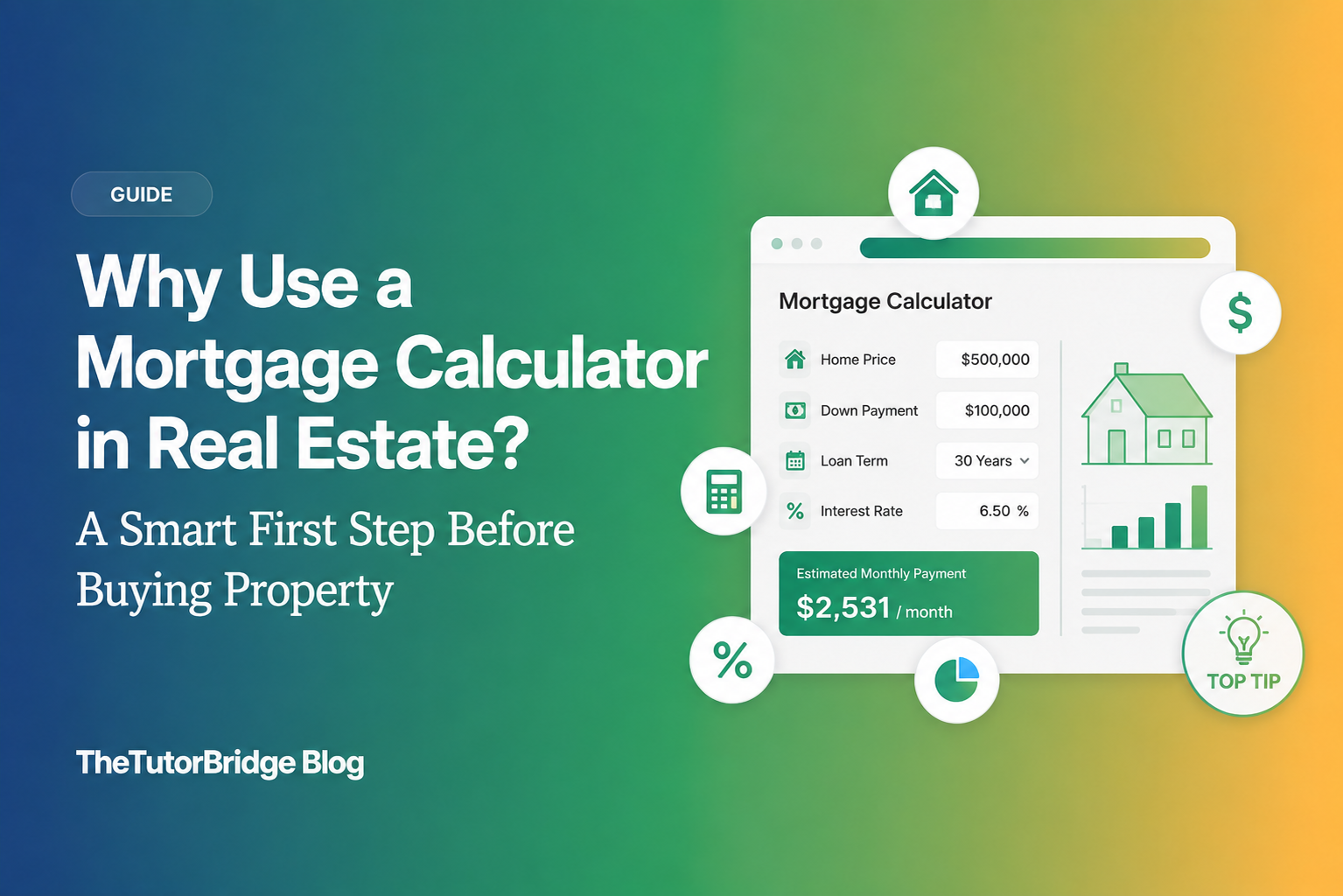
A good mortgage calculator does more than spit out a monthly payment. The mortgage calculator, for example, takes the core loan inputs — home price, down payment, interest rate, and loan term — and layers in the costs buyers tend to forget about: property tax, home insurance, PMI, and HOA fees. The output isn't just a number; it's a full amortization schedule showing exactly how much of every payment goes toward principal versus interest, and how that split shifts over 15 or 30 years.
That level of detail turns "what can I dream about" into "what can I actually afford and sustain" — a distinction that matters whether you're a first-time buyer, a real estate agent guiding a client, or a developer pricing a project.
Why It Matters in the Real Estate Industry
Sets a Realistic Budget Before House-Hunting Begins
Knowing your true monthly payment — not just the sticker price — narrows your search to homes you can comfortably afford, saving time and emotional energy.
Reveals the Real Cost of a Loan, Not Just the Monthly Figure
A 30-year loan looks lighter on paper, but a calculator shows how much more you'll pay in total interest compared to a 15-year term — often well over $100,000 on a typical loan.
Shows Exactly What Your Down Payment Buys You
Crossing the 20% down payment line eliminates PMI and lowers your principal. A calculator quantifies that trade-off instead of leaving it to guesswork.
Lets You Compare Scenarios Side by Side
Change the interest rate by half a point, or the term from 30 to 15 years — see exactly how that affects your monthly payment and lifetime interest — invaluable when rates are moving or you're negotiating.
Builds in the Hidden Costs Upfront
Property tax, insurance, PMI, and HOA fees are folded into the estimate, so there are no surprises after you move in.
Strengthens Your Negotiating Position
Walking into a conversation with an agent, lender, or builder already knowing your numbers puts you in control of the discussion, not the other way around.
How to Use the Tool
The mortgage calculator walks through this in a few simple steps: enter the home price and down payment, choose a loan term and interest rate, then add property tax, insurance, PMI, and HOA fees if they apply. Click calculate, and you get a complete breakdown — monthly payment, total interest paid, and a payment-by-payment amortization table. Run it two or three times with different down payments or terms before you commit to anything; the comparison is where the real insight is.
A Calculator Tells You What You Can Afford — Not Who You Should Buy From
Here's the part most calculators can't help with: the number on your screen is only half the decision. The other half is the builder behind the price tag — construction quality, documentation transparency, and whether the project will actually be delivered on time and as promised.
This is where due diligence on the developer matters as much as due diligence on the loan. Look for builders who are RERA-approved, who put pricing and paperwork in plain language, and who back their construction with recognised quality standards rather than just marketing claims. In smaller, fast-growing markets, trusted real estate builders have built their reputation around exactly this kind of transparency — RERA compliance, third-party construction-quality recognition, and in-house home loan assistance that turns a calculator estimate into an approved, real-world loan.
In other words: once your calculator tells you the payment you can sustain, the next job is finding a developer whose pricing, track record, and construction quality hold up to that number long after the keys are handed over — whether that's a listing two streets over or one of the RERA-approved apartments in Kurnool built specifically around this kind of transparency.
Calculate First, Commit Second
Whether you're planning a purchase in the US or evaluating a home loan elsewhere, the principle doesn't change: run the numbers before you fall for the property. Use a mortgage calculator to know exactly what you can afford, and put the same scrutiny into the builder — transparent pricing, regulatory compliance, and a construction track record you can actually verify — so the home you move into matches the number you calculated.